Report Bashir Hussain Azad, Chitral
District Naib Nazim and convener of the District Council Chitral Sultan Shah has tendered resignation from the post against some remarks passed by Provincial Minister Saleem Khan about the house on Thursday.
Earlier, the minister had been invited to address the house, which was on its monthly session at the end of which some members of the house asked questions from him. Some of the pinching questions irritated the minister who said he was not answerable to the house, and with this left the house. The house members then made a rumpus objecting to the remarks of the minister on which the convener announced his resignation and said with the insult of the house he would not like to chair its session any more. Sources in the Council secretariat said as per procedure, the resignation of the convener is being sent to the District Nazim for further action.--Chitraltoday.com
Friday, August 8, 2008

Unesco urged to save ancient sites in Mastuj
Report Bashir Hussain Azad, Chitral
Public representatives and social circles including Noor Wali Shah, Zaffarullah, Maj (r) Ahmed Said, Rehmat Ghafoor Baig and Bulbul have asked Unesco and the archaeology department aswell as Hazara University to save the important archaeological site of Lakhapo Dok in Mastuj from the land mafia who want to construct a rest house on it.
Addressing a press conference here, they said on the plateau of Lakhap, the remains of the Gandhara grave culture have been found by the archaeologists which are of rare nature. They said the archaeological sites should be preserved as national cultural heritage and their excavation must be carried out so that the history of the people could be traced on scientific lines. They said the archaeology department of Hazara University is busy in the excavation of such sites in many parts of the district and Mastuj was yet to be included in their list. They said some quarters in the district had aborted it and wanted to raise a rest house at the site. They said the construction over the archaeological treasure will be a great national loss of heritage. They also urged the Unesco high-ups to protect the sites and include it in world heritage.--Chitraltoday.com
Public representatives and social circles including Noor Wali Shah, Zaffarullah, Maj (r) Ahmed Said, Rehmat Ghafoor Baig and Bulbul have asked Unesco and the archaeology department aswell as Hazara University to save the important archaeological site of Lakhapo Dok in Mastuj from the land mafia who want to construct a rest house on it.
Addressing a press conference here, they said on the plateau of Lakhap, the remains of the Gandhara grave culture have been found by the archaeologists which are of rare nature. They said the archaeological sites should be preserved as national cultural heritage and their excavation must be carried out so that the history of the people could be traced on scientific lines. They said the archaeology department of Hazara University is busy in the excavation of such sites in many parts of the district and Mastuj was yet to be included in their list. They said some quarters in the district had aborted it and wanted to raise a rest house at the site. They said the construction over the archaeological treasure will be a great national loss of heritage. They also urged the Unesco high-ups to protect the sites and include it in world heritage.--Chitraltoday.com
Monday, August 4, 2008
save ancient sites of Chitral
This is with reference to a news item about “Aryan grave site in Chitral”. The news item reveals the department of archaeology is engaged in excavating important archaeological sites in various districts of NWFP including Chitral. I would like to draw the kind attention of the federal and the NWFP governments, the United Nations Educational and Scientific Organisation (Unesco) towards the proposal of the construction of officers' mess and guesthouse at the important archaeological site of “Lakhapo Dok” in Mastuj, district Chitral. The site is situated on 200 feet high mound with the remains of graves dating back to 600 BC. It is pertinent to mention that NWFP government constructed the building of a high school on another archaeological site at Brep, in Mastuj tehsil of Chitral, in 1978. "Noghoro Dok” in Brep houses the remains of a 2nd century AD fort and Budhist relics of great significance. I appeal to the culture department, archaeology department and Unesco to play their active role in protecting the 600 BC archaeological site of “Lakhapo Dok” from being raised to ground in order to erect an unnecessary officers mess and guesthouse at the site
Bashir Hussain Azad
Chitral
Chitraltoday.com
Bashir Hussain Azad
Chitral
Chitraltoday.com
Govt advised against Kabul route for power import
Dawn
By Zar Alam Khan
ISLAMABAD, Aug 3: Elected representatives of Chitral have called upon the government not to yield to international pressure and go for the shortest and most viable Wakhan-Chitral route for the proposed import of electricity from Central Asia.
Talking to this correspondent, MNA Shahzada Mohiuddin, MPA Ghulam Mohammad and Mastuj Tehsil Nazim Shahzada Sikandar ul Mulk said Pakistan should not take risk on the vital national project by acceding to the proposal to opt for the Afghanistan route.
They pointed out that for the NWFP such an initiative also translated into opening up of a much-needed second trade corridor along the Khyber Pass, as the proposed route was not only geographically closer to Tajikistan and Kryghistan but was also very secure since it had remained peaceful throughout the three decades of war and strife in Afghanistan.
The World Bank estimates the project cost at around $600 million.
Given NWFP's close proximity to Tajikistan by a mere 35km, that is the distance separating Chitral from the Central Asian country, it becomes the natural choice for laying the high voltage transmission line via Boroghil Pass, the very junction separating the Amu Darya (Oxus River) from River Chitral (better known as Kabul River in NWFP).
They said on the Chitral side, a jeep track already exists up to Chikar (Petch Utz) at a distance of only 11km from Boroghil right across which a truck-able road exists on the Afghan side of Darwaza. The Tajik border town of Langar is a mere 13km away from Darwaza while the distance from Chitral's border to Khorog, the provincial capital of GABO (Gorno-Badakshan Autonomous Oblasc), is just 13 km – all having a truck-able road.
Moreover, Chitral is already linked with the national power grid and the transmission line via the valley would cover only 700km to reach Peshawar.
One of the proposed routes for the power import will run through Afghanistan’s Kunduz province, Salang Pass and Jalalabad before reaching Peshawar, stretching 170km in Tajikistan, 430km in Afghanistan and 50km in Pakistan.
In contrast, they said, the Wakhan-Chitral route would run 370km in Tajikistan, only 30km in the Wakhan corridor of Afghanistan and 310km in Pakistan.
They said policy makers would have to think twice about the Afghanistan route, as even Nato and Afghan forces have been unable to ensure their supply lines from Pakistan.
Another proposed route would run via the Ishkuman valley of the Northern Areas covering 70 per cent hard rock and pass through three major glaciers and three mountain ranges – Karakoram, Hindukush and Himalayas – before covering around 1,300 kilometers to reach Pakistan's nearest national grid.
The Northern Areas currently has no link with the national grid and work on the Basha-Diamer Dam will take at least 10-15 years. In contrast, if the transmission line were to follow the natural plateau of the Boroghil route into Chitral, it encounters no glaciers and follows the river bank with no mountain passes at all.
Interestingly, studies by the German organisation GTZ put Chitral's power generation capacity at 6,000-8,000 megawatts, making it a potential source of cash to propel the national economy.
Indigenous electricity generated from River Chitral, the NWFP's largest river, can be added to the same Central Asian transmission line, making it a dual purpose and cost-effective proposition, they added.
Without electricity, the province’s industrialisation through the creation of US-sponsored Reconstruction Opportunity Zones will also remain a pipe dream and so will be the desire to wean people away from militancy into gainful employment.
They said Americans who were encouraging the project to resolve the power crisis in Pakistan should also be keen to boost the economy of the NWFP by linking it to Central Asia. Upon completion, this route will also supplement the province’s income side-by-side the Khyber Pass as both the northern and southern portals of the Lowari tunnel meet around November this year
By Zar Alam Khan
ISLAMABAD, Aug 3: Elected representatives of Chitral have called upon the government not to yield to international pressure and go for the shortest and most viable Wakhan-Chitral route for the proposed import of electricity from Central Asia.
Talking to this correspondent, MNA Shahzada Mohiuddin, MPA Ghulam Mohammad and Mastuj Tehsil Nazim Shahzada Sikandar ul Mulk said Pakistan should not take risk on the vital national project by acceding to the proposal to opt for the Afghanistan route.
They pointed out that for the NWFP such an initiative also translated into opening up of a much-needed second trade corridor along the Khyber Pass, as the proposed route was not only geographically closer to Tajikistan and Kryghistan but was also very secure since it had remained peaceful throughout the three decades of war and strife in Afghanistan.
The World Bank estimates the project cost at around $600 million.
Given NWFP's close proximity to Tajikistan by a mere 35km, that is the distance separating Chitral from the Central Asian country, it becomes the natural choice for laying the high voltage transmission line via Boroghil Pass, the very junction separating the Amu Darya (Oxus River) from River Chitral (better known as Kabul River in NWFP).
They said on the Chitral side, a jeep track already exists up to Chikar (Petch Utz) at a distance of only 11km from Boroghil right across which a truck-able road exists on the Afghan side of Darwaza. The Tajik border town of Langar is a mere 13km away from Darwaza while the distance from Chitral's border to Khorog, the provincial capital of GABO (Gorno-Badakshan Autonomous Oblasc), is just 13 km – all having a truck-able road.
Moreover, Chitral is already linked with the national power grid and the transmission line via the valley would cover only 700km to reach Peshawar.
One of the proposed routes for the power import will run through Afghanistan’s Kunduz province, Salang Pass and Jalalabad before reaching Peshawar, stretching 170km in Tajikistan, 430km in Afghanistan and 50km in Pakistan.
In contrast, they said, the Wakhan-Chitral route would run 370km in Tajikistan, only 30km in the Wakhan corridor of Afghanistan and 310km in Pakistan.
They said policy makers would have to think twice about the Afghanistan route, as even Nato and Afghan forces have been unable to ensure their supply lines from Pakistan.
Another proposed route would run via the Ishkuman valley of the Northern Areas covering 70 per cent hard rock and pass through three major glaciers and three mountain ranges – Karakoram, Hindukush and Himalayas – before covering around 1,300 kilometers to reach Pakistan's nearest national grid.
The Northern Areas currently has no link with the national grid and work on the Basha-Diamer Dam will take at least 10-15 years. In contrast, if the transmission line were to follow the natural plateau of the Boroghil route into Chitral, it encounters no glaciers and follows the river bank with no mountain passes at all.
Interestingly, studies by the German organisation GTZ put Chitral's power generation capacity at 6,000-8,000 megawatts, making it a potential source of cash to propel the national economy.
Indigenous electricity generated from River Chitral, the NWFP's largest river, can be added to the same Central Asian transmission line, making it a dual purpose and cost-effective proposition, they added.
Without electricity, the province’s industrialisation through the creation of US-sponsored Reconstruction Opportunity Zones will also remain a pipe dream and so will be the desire to wean people away from militancy into gainful employment.
They said Americans who were encouraging the project to resolve the power crisis in Pakistan should also be keen to boost the economy of the NWFP by linking it to Central Asia. Upon completion, this route will also supplement the province’s income side-by-side the Khyber Pass as both the northern and southern portals of the Lowari tunnel meet around November this year
Saturday, August 2, 2008
Helicopter to the roof of the world
As part of an ongoing series, Ray Nayler blogs about life in Central Asia.
Every Wednesday and Friday in Tajikistan, weather permitting, the Aga Khan foundation flies a helicopter from Dushanbe to the remote city of Khorog, in the Pamir mountains at an elevation of 2200 meters (7,200 feet) above sea level. If space allows, and you happen to work for an NGO here in Tajikistan, and have some business in the autonomous region of Gorno-Badakshan, you can sometimes get a ride. Gorno-Badakshan is the home of the Pamiri peoples, Ismail Muslims whose native languages are a series of obscure Eastern Iranian offshoots with fewer that 100,00 native speakers, Anya and I were lucky enough last Friday to benefit from the Aga Khan’s largesse, and hitched a ride on the helicopter to Khorog, where we planned to conduct recruiting for one of our programs as well as a re-entry seminar for our FLEX alumni, high school students freshly returned from the United States, in this remote corner of Tajikistan.
To use the phrase hitched a ride makes it sound as if it was easy, but there were, as always in Tajikistan, a number of bureaucratic hurdles to jump through, from getting permission for entry to the Gorno-Badakshan Autonomous Region to getting space on the helicopter itself. But all of the bureaucratic hassles melt away as the sleek Bell lifts from the Dushanbe runway and the ragged patchwork of agriculture at the edges of the capitol, the rusty bones of industry and scrapyards, give way to crenellated hills and wide, drying river beds with ribbons of water veining through them, reflecting the sun like mirrored glass. The helicopter banks gracefully southeast as the passengers, ears muffled in protective headphones against the engines’ roar, settle in to some of the most spectacular scenery the world has to offer.
As we move further from the capitol, the mountains grow drier, more violently twisted from the flatlands below, and more imposing. Knife-ridges of rock lay exposed to the eroding wind, and layers of sediment hardened to granite lay tilted to the sky by tectonics. From far off, it appears as if the loose earth is running down the mountains like water. Soon we are flying not over but through the mountains, with grey sentinels rising around us and white flashes of snow that grow, over time, to glaciers grinding their way down the mountainsides and, as we hover over Afghanistan, sawblade ridges of stone outside our windows. Below, the Pyandzh River winds its course, and villages nestle up to, splashes and streaks of cultivated green in the arid, twisting scene.
On the Tajik side of the border, the houses are soviet-style, of concrete or sometimes mud-brick, their pitched roves clad in corrugated tin or fiberglass. On the Afghan side, the mudbrick homes are more chaotically aligned, their rooves flat, and they cling to the mountainsides more closely, reserving the scarce flatland for little amoeba-shaped fields fed by canals from the mountain rivers. On a trip by car to Bamyan from Kabul a few years ago I got a closer view of these canals, which provide a lifeline to the little mountain communities along the arid river valleys. The canals angle less steeply from the riverbed, along the base of the mountain. The Pyandzh River valley, above which we are now flying, receives less that 8 inches of water in a year. It is snowmelt which feds the river. Below the line of the canal, everything is green. Above it, there is no vegetation at all. The helicopter makes a steep turn over the Pyandzh River and comes gently to rest on the cracked tarmac of the Khorog airport.
“Welcome to Khorog.” A man with a nametag around his neck and several gold teeth whisks away our passports and permissions with a grin. Just four hours later, our small mission in this remote city smothered in poplar trees finished, we lift off again, crossing the flowing border between the two countries in the air, and follow the river back toward home. Some journeys really are about the trip, rather than the destination.
Every Wednesday and Friday in Tajikistan, weather permitting, the Aga Khan foundation flies a helicopter from Dushanbe to the remote city of Khorog, in the Pamir mountains at an elevation of 2200 meters (7,200 feet) above sea level. If space allows, and you happen to work for an NGO here in Tajikistan, and have some business in the autonomous region of Gorno-Badakshan, you can sometimes get a ride. Gorno-Badakshan is the home of the Pamiri peoples, Ismail Muslims whose native languages are a series of obscure Eastern Iranian offshoots with fewer that 100,00 native speakers, Anya and I were lucky enough last Friday to benefit from the Aga Khan’s largesse, and hitched a ride on the helicopter to Khorog, where we planned to conduct recruiting for one of our programs as well as a re-entry seminar for our FLEX alumni, high school students freshly returned from the United States, in this remote corner of Tajikistan.
To use the phrase hitched a ride makes it sound as if it was easy, but there were, as always in Tajikistan, a number of bureaucratic hurdles to jump through, from getting permission for entry to the Gorno-Badakshan Autonomous Region to getting space on the helicopter itself. But all of the bureaucratic hassles melt away as the sleek Bell lifts from the Dushanbe runway and the ragged patchwork of agriculture at the edges of the capitol, the rusty bones of industry and scrapyards, give way to crenellated hills and wide, drying river beds with ribbons of water veining through them, reflecting the sun like mirrored glass. The helicopter banks gracefully southeast as the passengers, ears muffled in protective headphones against the engines’ roar, settle in to some of the most spectacular scenery the world has to offer.
As we move further from the capitol, the mountains grow drier, more violently twisted from the flatlands below, and more imposing. Knife-ridges of rock lay exposed to the eroding wind, and layers of sediment hardened to granite lay tilted to the sky by tectonics. From far off, it appears as if the loose earth is running down the mountains like water. Soon we are flying not over but through the mountains, with grey sentinels rising around us and white flashes of snow that grow, over time, to glaciers grinding their way down the mountainsides and, as we hover over Afghanistan, sawblade ridges of stone outside our windows. Below, the Pyandzh River winds its course, and villages nestle up to, splashes and streaks of cultivated green in the arid, twisting scene.
On the Tajik side of the border, the houses are soviet-style, of concrete or sometimes mud-brick, their pitched roves clad in corrugated tin or fiberglass. On the Afghan side, the mudbrick homes are more chaotically aligned, their rooves flat, and they cling to the mountainsides more closely, reserving the scarce flatland for little amoeba-shaped fields fed by canals from the mountain rivers. On a trip by car to Bamyan from Kabul a few years ago I got a closer view of these canals, which provide a lifeline to the little mountain communities along the arid river valleys. The canals angle less steeply from the riverbed, along the base of the mountain. The Pyandzh River valley, above which we are now flying, receives less that 8 inches of water in a year. It is snowmelt which feds the river. Below the line of the canal, everything is green. Above it, there is no vegetation at all. The helicopter makes a steep turn over the Pyandzh River and comes gently to rest on the cracked tarmac of the Khorog airport.
“Welcome to Khorog.” A man with a nametag around his neck and several gold teeth whisks away our passports and permissions with a grin. Just four hours later, our small mission in this remote city smothered in poplar trees finished, we lift off again, crossing the flowing border between the two countries in the air, and follow the river back toward home. Some journeys really are about the trip, rather than the destination.
Tuesday, July 29, 2008
Revisiting Chitral's history
Chitral State
Dated the 28th May 1941.
My dear friend,
During the period of war I did not like to confront the Government with any new request and so cause complication, but the report that a member of the ruling family of Nagar is being appointed the Governor of Yasen has caused such a consternation to the member of my own family and clan that I think it most urgent to bring it to your notice. About three hundred years ago the two brothers Mantaram Shah called Shah Katur the 1st and Khuahwaqt divided the Chitral State among themselves. Yasen since then became the seat of the descendants of Khushwaqt uninterruptedly till the year 1880, when my grand father Annual Mulk occupied all the three districts of Yasen Ghizr and Ishkoman and annexed them to Chitral ousting Mohiudding Pahalwan the ruler of Yasen. Till the year 1895 Yasen Ghizr and Ishkoman remained a part of Chitral. In 1895 these three districts were separated from Chitral state and the eldest son of the late ruler of Yasen, Abdurrahman Khan by name was appointed the ruler of Yasen, and Ghizr was also given to him. Ishkoman was given by my grand father to the exiled ruler of Wakhan, and remained in his hands till his death and was not annexed to the reconstituted principality of Yasen. As it was an act of clemency on the part of Government, it did not disturb our minds very much Later on Ghizr and Kuh were separated from Yasen and were made separate governorships under one Murad khan. As Murad Khan did not belong to any of the ruling houses of Gilgit Agency, his appointment was not very much resented being considered as a temporary measure. Now the crux of the whole question is that from Poonial to Chitral it is the heritage of one family and the members of this family are spread throughout the length and breadth of this country and many of them are in the service of the Government in different capacities. If a member of the ruling family of a state, who does not belong to our race is made Governor in any of these districts, then it shall be giving them a right which they never had in the history and depriving us all of our legitimate heritage.
As the beginning Government always looks to the rights and privileges of the people in all the corners of the Empire, so we have also a right to crave justice of the benign Government to our cause and not to dish out our heritage to outsiders while our own cousins who are the rightful rulers of the country are also aspirant to the kind favours of the Government. In the presence of a legitimate son of late Abdurrahaman Khan no one can claim Yasen by right. After the Khushwaqtas the second rightful clan is the Katur family of Chitral, both by right of conquest and by right of descent. The Burushas, a side branch of Khushwaqtas have always remained confined to Poonial, and before Abdurrahman Khan's time have never taken any interest in the affairs of Yasen buy they are also the possible claimant after the two aforesaid clans. But to bring a man from Nagar or Hunza shall be considered a great act of injustice for us all, because those people for the last three or four hundred years have never dared to come out of their valley and to interfere in the possessions of our family. I also attach herewith a position, which the members of my family have given me. A Genealogical tree of the Descent of Khushwaqtas is also attached.
Your most sincere friend.
Sd/-
Mehtar of Chitral
4. These instances show that weak old men cannot function properly as Governors in these District and therefore it seems only a wise precaution to ensure, by means of the proposal now under consideration, that in future no Governor shall remain in official harness beyond the age when it may reasonably be expected that his mental and physical powers will decline. Sixty is, I think, the latest age which can safely be adopted if this precaution is to be effective. 5. There remains the question of the Maharaja of Kashmir's concern with the proposed changes. As Suzeain of these Districts, His Highness should I think be consulted, and his approval to the new rules should be obtained before they are made public. I propose therefore to refer the proposals to the Kashmir Government as son as I hear that they have been accepted by the Government of India and to obtain His Highness' formal consent before authorising the Political Agent to announce the changes.
6. All this must take time, but the earlier the retirement of Raja Mir Baz Khan and His succession by Khan Saheb Mahbub Ali Khan Takes place the better, and so I would request that the Government of India's approval of these proposals may kindly be conveyed to me as early as possible. I have etc.,
Sd/- D.M. Fraser,
Resident in Kashmir
Dated the 28th May 1941.
My dear friend,
During the period of war I did not like to confront the Government with any new request and so cause complication, but the report that a member of the ruling family of Nagar is being appointed the Governor of Yasen has caused such a consternation to the member of my own family and clan that I think it most urgent to bring it to your notice. About three hundred years ago the two brothers Mantaram Shah called Shah Katur the 1st and Khuahwaqt divided the Chitral State among themselves. Yasen since then became the seat of the descendants of Khushwaqt uninterruptedly till the year 1880, when my grand father Annual Mulk occupied all the three districts of Yasen Ghizr and Ishkoman and annexed them to Chitral ousting Mohiudding Pahalwan the ruler of Yasen. Till the year 1895 Yasen Ghizr and Ishkoman remained a part of Chitral. In 1895 these three districts were separated from Chitral state and the eldest son of the late ruler of Yasen, Abdurrahman Khan by name was appointed the ruler of Yasen, and Ghizr was also given to him. Ishkoman was given by my grand father to the exiled ruler of Wakhan, and remained in his hands till his death and was not annexed to the reconstituted principality of Yasen. As it was an act of clemency on the part of Government, it did not disturb our minds very much Later on Ghizr and Kuh were separated from Yasen and were made separate governorships under one Murad khan. As Murad Khan did not belong to any of the ruling houses of Gilgit Agency, his appointment was not very much resented being considered as a temporary measure. Now the crux of the whole question is that from Poonial to Chitral it is the heritage of one family and the members of this family are spread throughout the length and breadth of this country and many of them are in the service of the Government in different capacities. If a member of the ruling family of a state, who does not belong to our race is made Governor in any of these districts, then it shall be giving them a right which they never had in the history and depriving us all of our legitimate heritage.
As the beginning Government always looks to the rights and privileges of the people in all the corners of the Empire, so we have also a right to crave justice of the benign Government to our cause and not to dish out our heritage to outsiders while our own cousins who are the rightful rulers of the country are also aspirant to the kind favours of the Government. In the presence of a legitimate son of late Abdurrahaman Khan no one can claim Yasen by right. After the Khushwaqtas the second rightful clan is the Katur family of Chitral, both by right of conquest and by right of descent. The Burushas, a side branch of Khushwaqtas have always remained confined to Poonial, and before Abdurrahman Khan's time have never taken any interest in the affairs of Yasen buy they are also the possible claimant after the two aforesaid clans. But to bring a man from Nagar or Hunza shall be considered a great act of injustice for us all, because those people for the last three or four hundred years have never dared to come out of their valley and to interfere in the possessions of our family. I also attach herewith a position, which the members of my family have given me. A Genealogical tree of the Descent of Khushwaqtas is also attached.
Your most sincere friend.
Sd/-
Mehtar of Chitral
4. These instances show that weak old men cannot function properly as Governors in these District and therefore it seems only a wise precaution to ensure, by means of the proposal now under consideration, that in future no Governor shall remain in official harness beyond the age when it may reasonably be expected that his mental and physical powers will decline. Sixty is, I think, the latest age which can safely be adopted if this precaution is to be effective. 5. There remains the question of the Maharaja of Kashmir's concern with the proposed changes. As Suzeain of these Districts, His Highness should I think be consulted, and his approval to the new rules should be obtained before they are made public. I propose therefore to refer the proposals to the Kashmir Government as son as I hear that they have been accepted by the Government of India and to obtain His Highness' formal consent before authorising the Political Agent to announce the changes.
6. All this must take time, but the earlier the retirement of Raja Mir Baz Khan and His succession by Khan Saheb Mahbub Ali Khan Takes place the better, and so I would request that the Government of India's approval of these proposals may kindly be conveyed to me as early as possible. I have etc.,
Sd/- D.M. Fraser,
Resident in Kashmir
Monday, July 28, 2008
Govt asked to import power thru Chitral route
By Zar Alam Khan
ISLAMABAD: Elected representatives of Chitral have called upon the government to go for the shortest and most viable Wakhan-Chitral route for the proposed import of 1,000 megawatts electricity from Central Asia.
Talking to this correspondent, MNA Shahzada Mohiuddin, MPA Ghulam Mohammad and tehsil nazim Mastuj Shahzada Sikendarul Mulk pointed out that for the NWFP such an initiative also translates into opening up of a much-needed second trade corridor along the Khyber Pass, as the proposed route was not only geographically closer to Tajikistan and Kryghistan, but was also very secure since it had remained peaceful throughout the three decades of war and strife in Afghanistan.
The World Bank estimates the project cost at around $600 million. Given NWFP's close proximity to Tajikistan by a mere 35 miles, that is the distance separating Chitral from the Central Asian country, it becomes the natural choice for laying the high voltage transmission line via Boroghil Pass, the very junction separating the Amu Darya (Oxus River) from River Chitral (better known as Kabul River in NWFP).
They said on the Chitral side, a jeep track already exists up to Chikar (Petch Utz) at a distance of only 11 miles from Boroghil right across which a truck-able road exists on the Afghan side of Darwaza. The Tajik border town of Langar is a mere 13 miles away from Darwaza while the distance from Chitral's border to Khorog, the provincial capital of GABO (Gorno Badakshan Autonomous Oblasc), is just 137 miles - all having a truck-able road.
Moreover, Chitral is already linked with the national power grid and in contrast to the 1,300 kilometers to be covered if the Northern Areas route is taken the transmission line via Chitral will only be 700 kilometers to reach Peshawar.
They said the two other proposed routes were exorbitantly costly besides being danger prone. The first to pass via Kabul and connect to Quetta will have to cover 2,500 kilometers of treacherous insurgency-prone Taliban territory. Policy makers will have to think twice about the Kabul route, as Nato and Afghan forces have been unable even to ensure continuous gas supply from Balochistan. The second proposed route via the Ishkuman valley of the Northern Areas covering 70 per cent hard rock passes through three major glaciers and three mountain ranges - Karakoram, Hindukush and Himalayas - before covering around 1,300 kilometers to reach Pakistan's nearest national grid. It makes it a very costly and unfeasible proposition. The Northern Areas currently has no link with the national grid and work on the Basha-Diamer Dam will take at least 10-15 years. In contrast, if the transmission line were to follow the natural plateau of the Boroghil route into Chitral, it encounters no glaciers and follows the river bank with no mountain passes at all. Interestingly, studies by the German GTZ put Chitral's power generation capacity at 6,000-8,000 megawatts making it a potential source of cash to propel the national economy. Indigenous electricity generated from River Chitral, the NWFP's largest river, can be added to the same Central Asian transmission line thereby making it a dual purpose system besides making it a cost-effective proposition.
Without electricity, the province’s industrialisation through the creation of US-sponsored Reconstruction Opportunity Zones will remain a pipe dream and so will be the desire to wean people away from militancy into gainful employment. Americans who are encouraging this $600 million project to resolve the power crisis of Pakistan should also be keen to boost the NWFP economy by seeing that the landlocked province is linked to Central Asia. Upon completion, this route will also supplement the province’s income side-by-side the Khyber Pass as both the northern and southern portals of the Lowari Tunnel meet around November this year.--chitraltoday.com
ISLAMABAD: Elected representatives of Chitral have called upon the government to go for the shortest and most viable Wakhan-Chitral route for the proposed import of 1,000 megawatts electricity from Central Asia.
Talking to this correspondent, MNA Shahzada Mohiuddin, MPA Ghulam Mohammad and tehsil nazim Mastuj Shahzada Sikendarul Mulk pointed out that for the NWFP such an initiative also translates into opening up of a much-needed second trade corridor along the Khyber Pass, as the proposed route was not only geographically closer to Tajikistan and Kryghistan, but was also very secure since it had remained peaceful throughout the three decades of war and strife in Afghanistan.
The World Bank estimates the project cost at around $600 million. Given NWFP's close proximity to Tajikistan by a mere 35 miles, that is the distance separating Chitral from the Central Asian country, it becomes the natural choice for laying the high voltage transmission line via Boroghil Pass, the very junction separating the Amu Darya (Oxus River) from River Chitral (better known as Kabul River in NWFP).
They said on the Chitral side, a jeep track already exists up to Chikar (Petch Utz) at a distance of only 11 miles from Boroghil right across which a truck-able road exists on the Afghan side of Darwaza. The Tajik border town of Langar is a mere 13 miles away from Darwaza while the distance from Chitral's border to Khorog, the provincial capital of GABO (Gorno Badakshan Autonomous Oblasc), is just 137 miles - all having a truck-able road.
Moreover, Chitral is already linked with the national power grid and in contrast to the 1,300 kilometers to be covered if the Northern Areas route is taken the transmission line via Chitral will only be 700 kilometers to reach Peshawar.
They said the two other proposed routes were exorbitantly costly besides being danger prone. The first to pass via Kabul and connect to Quetta will have to cover 2,500 kilometers of treacherous insurgency-prone Taliban territory. Policy makers will have to think twice about the Kabul route, as Nato and Afghan forces have been unable even to ensure continuous gas supply from Balochistan. The second proposed route via the Ishkuman valley of the Northern Areas covering 70 per cent hard rock passes through three major glaciers and three mountain ranges - Karakoram, Hindukush and Himalayas - before covering around 1,300 kilometers to reach Pakistan's nearest national grid. It makes it a very costly and unfeasible proposition. The Northern Areas currently has no link with the national grid and work on the Basha-Diamer Dam will take at least 10-15 years. In contrast, if the transmission line were to follow the natural plateau of the Boroghil route into Chitral, it encounters no glaciers and follows the river bank with no mountain passes at all. Interestingly, studies by the German GTZ put Chitral's power generation capacity at 6,000-8,000 megawatts making it a potential source of cash to propel the national economy. Indigenous electricity generated from River Chitral, the NWFP's largest river, can be added to the same Central Asian transmission line thereby making it a dual purpose system besides making it a cost-effective proposition.
Without electricity, the province’s industrialisation through the creation of US-sponsored Reconstruction Opportunity Zones will remain a pipe dream and so will be the desire to wean people away from militancy into gainful employment. Americans who are encouraging this $600 million project to resolve the power crisis of Pakistan should also be keen to boost the NWFP economy by seeing that the landlocked province is linked to Central Asia. Upon completion, this route will also supplement the province’s income side-by-side the Khyber Pass as both the northern and southern portals of the Lowari Tunnel meet around November this year.--chitraltoday.com
Subscribe to:
Posts (Atom)
Awesome and rugged

Beauty of Chitral
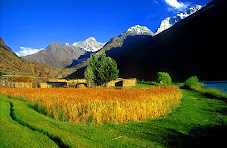
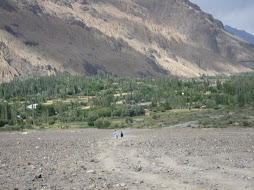
Kishmanja, a beautiful village in Yarkhun valley
Lush green
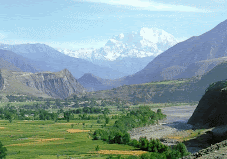
DIZG: threatened by floods
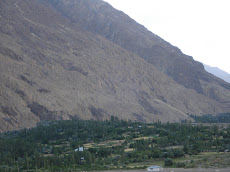
The legendary village of Ayun in Chitral
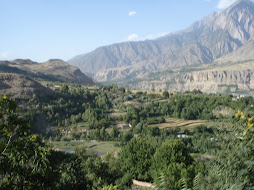
On way to Bumburet
Dizg, Yarkhun
About Me
- Zar Alam Khan Razakhel
- Village Dizg, Yarkhun valley, Chitral, Pakistan
- I blog at http://chitraltoday.net (ChitralToday) about Chitral, its people, culture, traditions and issues. I have been writing about Chitral since 2000. Chitral is a scenic valley in the extreme north-west of Pakistan.