I used to live in Chitral for quite long time during the Afghan War and I travelled through Broghil and Durah so many times, I was doing stone business in Chitral. This is the only source to read this online news paper to be incontact with Chitrali people. I always remember the Chitrali people, their simplicity, honesty and hospitality. I have enough information about the route which is more discussed in the local online news papers. What is feel I want to extant this topic into you online news papers as well because too many readers browsing the online newspaper. Currently, I have a leather business in the Nothern City of Tajikistan "Khujand". The letter I am pasting bellow also you can find in attahced file,
Regards,
Mirza Muhammad Ziayie
Khujan - Tajikistan
Chitral – Ishkashem Highway Project
During my studies in Kazakistan one of my colleagues awed me very much, there were two reasons; one I was not a good reader, weak in studies and second I was not good as my friend was in Russian. It took me three months; I mean I was so impressed, he was quoting books and writers all the time; one fine morning we were sitting outside the apartment Ms. Dilnozo asked me about my friend Mr. Rahmikodov. I replied; he is very learned guy, and she smile, her impression was showing that something is wrong. I mean to quote the sentence here is, we have to take this debate on a very positive way and on realistic grounds, not the fake materials people do write and we will extract. Whilst, the topic we are talking, is very important for the future generations of Chitral, Badakhshan Afghanistan and Badakhshan Tajikistan. Before I start answering the respectable writers, I can apologize first, because my English is not up to that standard and I am not a good writer
like them. However, I am not personally targeting anyone; it is a kind of experience sharing. During the Afghan war several times I traveled to Chitral from Badakhshan and Chitral to Badakhshan via Durah, Khatinza and once from Broghil. During my student life and even now I have very frequent visits to Central Asian Countries, still doing business in Khujan Tajikistan. Last week I traveled from Ishkashem Afghanistan – Tajikistan via Khorog to Dushanbe then fly to Khujand.
First of all, I can comments on the first writer; Mr. I. Aseer’s write up is impressive one; he has a good knowledge about the area from Chitral to up –to Ishkashem Bridge. The same he has written is perceive sound; I met one Chitrali guy in 1994, we travelled from Chitral Town to Garum Chashma, he was helper with the surveyor team, still I remember his name; Syed Alim Shah. During discussion he told that the distance is the same what Mr. I. Aseer has written in his letter. But on the other hand, I will be disagreeing with the distances given by Mr. Aseer between Dushanbe and Chitral is not the correct one. Yes, it is right as Alim Shah told that 185 to 225 like that, it is from Chitral to Ishkashem not Dushanbe it might be miss printed. While, you are travelling from Chitral to Dushanbe that you have to choose three bridges to enter into Tajikistan.
Bridge One (Ishkashem)
The nearest bridge which has access for heavy and light vehicular is Ishkashem the bridge has been inaugurated by HH Prince Karim Aga Khan, Mr. Khalili from Afghan side and Mr. Imam Ali Rahmanov the President of Tajikistan. If you cross that bridge you will enter into Tajikisan there is only one road leads to Dushanbe is the road on the right bank of Oxus River (Darya-e-Panj in Tajikistan and Dary-e-Amu the Afghan people says). The condition is good in most places but, it is difficult to travel in winter time due to heavy snow fall as we experienced last week. Here, I can share with our readers about the distances between Chitral to Ishkashem Tajikistan is similar like that what Mr. I. Aseer has written as I traveled, but it might be less or may be 50 km longer not more than that. While, you are travelling from Chitral to Brogil it is approximately 220 km only in Pakistan side. Beside of that last year July when we went to Brogil in Afghanistan side we
measured by our own jeep distance recorder, it is 110 km from Ishkashem to Khandud the capital town of Brogil and the same from Khandud to Brogil, it means 220 km from Afghanistan side. So, to reach the first bridge through Broghil pass indicates traveling more than 440 km from Chitral to reach Ishkashem Bridge. In one autumn we three friends traveled from Chitral to Ishkashem , it was 1996 and took fifteen days to reach there through Broghil. While, travelling from Chitral to Ishkashem is only three days journey through Durah Pass. Here, I can also mention the distance between Ishkashem to Khorog that is 180 km and distance between Khorog to Dushanbe is 579 km but, if you reached in Khorog one another road is leading to Kirghizstan, so you may go to Dushanbe or other central Asian Country (but only in summer Kirghizistan).
Bridge Two (Shughanan)
The second Bridge also constructed by Aga Khan Development Network between Shughnan Afghanistan to Khorog. Shughnan is like Chitral, six month cut off from the other part of Afghanistan due to heavy snow fall in Shiwa Pass. If you are choosing this bridge to go to Tajikistan then you have to travel to Baharak and then Shiwa pass to Shughan and then Khorog. So, from Ishkashem to Baharak it is approximately 100 km & Baharak to Shughan is approximately the same 100 km the road through Brogil will be 640 to enter into Tajikistan. While, choosing Durah Pass you cannot go to Ishkashem and the distance between Ishkashem and Zebok is 35 km so, between Chitral and Khorog will be 385. Hence, you are in a Central Asian City, you may go to Dushanbe or Kirghizstan from there.
Bridge Three
Sher Khan Bandar the Main Bridge between Afghanistan and Tajikistan
This bridge is situated at a distance of 85 km from Kunduz city, most trade between Central Asian Countries and Afghanistan is accessible through this bridge & route. It is easy for reset of the Asian countries to choose this route rather than the other two bridges, except security the road condition and other infrastructure is very good, if road has been constructed between Chitral to Badakhshan this route will be used sometimes in winter. Here, again I can write the distance between Faizabad the capital city of Badakhshan and Kunduz is 265 and between Ishkashem to Faizabad is 160.
Now I would like to answer the second writer
1. The road will cross through Pakistani Territory (expect Wakhon Strip), what I think is not the the right statement when we are talking about Durah or Broghil, it is only Possible through Arkari to cross the 20 km of Wakhon Strip at Qazdeh, but it is not possible because of the glacier on the way between Arkari and Qazdeh.
2. Every county construct road to see the future feasibility not only to see the current scenario, the future cost of trades and travelers are also being considered. If we think like that the road from Peshawer through Gilgit to Chital is more feasible as compare to Lawari Tunnel. Furthermore, Durah pass was available for vehicular traffic for several years and it has been blocked in several places when Mr. Najmuddin Khan was Commander of Northern Badakhshan due to Taliban fears, only needs repair and expansion.
3. Yes, here I can agree with the writer that very short span of time the road will be constructed, but huge amount will be spend on maintenance or these kinds of roads are constructed for one time. Aga Khan Rural Support Programme built roads even for pastures in Northern Pakistan, Broghil is the only area don’t have road access, what I think is maintenance.
4. Yes, the Broghil road is much easier for Silk Route and if we are thinking about China that this side is 100% more feasible than current KKH between Pakistan & China.
5. Wakhan is six month cut off with other part of Afghanistan due to snow fall and both sides Durah and Broghil are not feasible in winter but using modern technology it can be possible.
6. Finally, we don’t have to be impressed from the Western people and the NOTES OF CHITRAL which written by them, just ask thousand Chitralies & Afghanis living in Chitral have been to Badakhshan during the Afghan war and after that, which part is shortest and more reasonable THAT WE CAN SAY A BEST NOTE.
7. Last but not least, I can comments on the writer’s view & try to correct him; the Capital City of Afghan Province Badakhshan is Faizabad. If you are travelling from Faizabad to Mazar-e-Sharif, you have to go to Takhar Province first then Kuduz Province, then Baghlan Province then Smangan Province then you can enter into Balkh Province and Mazar-e-Sharif is the capital city of Balkh. When we are talking about historical records & trade, we can start from the very recent records i.e. trade during Afghan War (which I was also doing stone business through Durah Pass), at the Time of Mehtar-e-Chitral and Religious Scholars like Hakin Nasir-e-Khisraw and Pir Shams. I can agree with the writer that there are some stories regarding Kirghiz & Chinese people who were using the Broghil route for Pilgrims and trade and still that is feasible for China and the Kirghizstan but that must be another topic like Kashghar or Pamir – Chitral highway not
Chitral – Ishkashem Highway.
Mirza Mohammad Ziayie
Khujand - Tajikistan
Wednesday, February 4, 2009

Education with a difference
By Islamuddin
The lack of meaningful education is the biggest challenge facing Pakistan and without overcoming this challenge Pakistan can neither develop nor overcome extremism and the culture of intolerance. This situation has persisted in spite of our spending enormous resources in teacher training and mushroom growth of institutions for teacher training.
In this background when I received a letter from the Professional Development Central, Chital (PDCC) of the Aga Khan University informing me that I have been nominated for a six week certificate course in Educational Leadership and Management (ELM), I was in a fix whether to attend the course or not.. Some friends expressed the opinion that there is not much to be learnt from these trainings. As the first segment of the course was due to start in January and I had no other commitments during the month, I decided to join the course. The way the course opened and progressed, I was happily surprised to know that there was so much to be learnt and shared.
The theories and practices discussed during the course had been picked up from successful models around the world, tested and implemented in advanced countries. Discussions on the best practices and their contextualization proved to be fascinating areas for committed teachers. After going through these intensive sessions, the course participants were able to make out sense as to why our education system was not producing desired results. There was consensus among trainees that our teachers fail to be pedagogical leaders. For them teaching was just a job, which only attracted the disgruntled, who lacked commitment to teach and to improve their capacity. Our traditional training modules only re-enforced the existing mindset that trainings were of no practical use except for TA/DA and technical requirements for promotion or a break from school drudgery. No efforts are made to re-engineer the correct mindset, so as to mould the trainees to
become genuine teachers.
The training at PDCC was different. It not only addressed the issue of human re-engineering but also the business process re-engineering. It brought about paradigm shift-in the attitude of trainees and gave them the much needed skills to improve the education scene. The only complaint from the trainees was that they were not allowed space to change things in their institutions. However at the end of the first segment of the training programme the trainees were convinced that given commitment and capacity, way can be found to improve things within the existing system.
There is an urgent need to expand the training activities of PDCC, not only in the education sector but also to extend it to other professions, specially in enterprise development without which Chitralis can not benefit from the post-Lowari emerging world economic order. It is unfortunate that the proposed opening of Aga Khan University campus in Chitral with EU funding, could not materialize and opportunity to gain global reach in education was lost, at least for the time being. In this scenario PDCC provides us a silver lining to update skills of professionals in education and hopefully in other sectors in not too distant a future.
PDCC has proved to be a global level training institution which has brought the most advanced knowledge and skills at the door steps of Chitralis. On the basis of my experience at PDCC I can say with confidence that it will be able to make a difference in our much neglected education sector. It is encouraging to see that all the instructors at PDCC are Chitralis, who know our context. The team is ably led by Dr.Afzal, again a Chitralis, with tremendous commitment to PDC vision. This generous and unassuming scholar along with his dedicated team has put Chitral on the educational map of Pakistan. Today professionals from different parts of Pakistan, including Kashmir and FATA are availing the training opportunities at PDCC. For me my two week stay at PDCC has been most rewarding. It has helped me to conceptualize and contextualize the knowledge and skills that I already have and has also given me additional knowledge and skills to be
more efficient and effective. I found the standard of its faculty and resources to be of global standard of which I have ample experience as I have gone through the training processes at leading institutions like CSA and NIPAs etc. It would be in the fitness of things that the Govt. should get its teachers trained at PDCC and PDCC, on its part should consider starting regular teachers training programmes like PTC,CT,B.Ed and M.Ed to improve the standard of professionalism among teachers and prevent mushroom growth of fake institutions.
The lack of meaningful education is the biggest challenge facing Pakistan and without overcoming this challenge Pakistan can neither develop nor overcome extremism and the culture of intolerance. This situation has persisted in spite of our spending enormous resources in teacher training and mushroom growth of institutions for teacher training.
In this background when I received a letter from the Professional Development Central, Chital (PDCC) of the Aga Khan University informing me that I have been nominated for a six week certificate course in Educational Leadership and Management (ELM), I was in a fix whether to attend the course or not.. Some friends expressed the opinion that there is not much to be learnt from these trainings. As the first segment of the course was due to start in January and I had no other commitments during the month, I decided to join the course. The way the course opened and progressed, I was happily surprised to know that there was so much to be learnt and shared.
The theories and practices discussed during the course had been picked up from successful models around the world, tested and implemented in advanced countries. Discussions on the best practices and their contextualization proved to be fascinating areas for committed teachers. After going through these intensive sessions, the course participants were able to make out sense as to why our education system was not producing desired results. There was consensus among trainees that our teachers fail to be pedagogical leaders. For them teaching was just a job, which only attracted the disgruntled, who lacked commitment to teach and to improve their capacity. Our traditional training modules only re-enforced the existing mindset that trainings were of no practical use except for TA/DA and technical requirements for promotion or a break from school drudgery. No efforts are made to re-engineer the correct mindset, so as to mould the trainees to
become genuine teachers.
The training at PDCC was different. It not only addressed the issue of human re-engineering but also the business process re-engineering. It brought about paradigm shift-in the attitude of trainees and gave them the much needed skills to improve the education scene. The only complaint from the trainees was that they were not allowed space to change things in their institutions. However at the end of the first segment of the training programme the trainees were convinced that given commitment and capacity, way can be found to improve things within the existing system.
There is an urgent need to expand the training activities of PDCC, not only in the education sector but also to extend it to other professions, specially in enterprise development without which Chitralis can not benefit from the post-Lowari emerging world economic order. It is unfortunate that the proposed opening of Aga Khan University campus in Chitral with EU funding, could not materialize and opportunity to gain global reach in education was lost, at least for the time being. In this scenario PDCC provides us a silver lining to update skills of professionals in education and hopefully in other sectors in not too distant a future.
PDCC has proved to be a global level training institution which has brought the most advanced knowledge and skills at the door steps of Chitralis. On the basis of my experience at PDCC I can say with confidence that it will be able to make a difference in our much neglected education sector. It is encouraging to see that all the instructors at PDCC are Chitralis, who know our context. The team is ably led by Dr.Afzal, again a Chitralis, with tremendous commitment to PDC vision. This generous and unassuming scholar along with his dedicated team has put Chitral on the educational map of Pakistan. Today professionals from different parts of Pakistan, including Kashmir and FATA are availing the training opportunities at PDCC. For me my two week stay at PDCC has been most rewarding. It has helped me to conceptualize and contextualize the knowledge and skills that I already have and has also given me additional knowledge and skills to be
more efficient and effective. I found the standard of its faculty and resources to be of global standard of which I have ample experience as I have gone through the training processes at leading institutions like CSA and NIPAs etc. It would be in the fitness of things that the Govt. should get its teachers trained at PDCC and PDCC, on its part should consider starting regular teachers training programmes like PTC,CT,B.Ed and M.Ed to improve the standard of professionalism among teachers and prevent mushroom growth of fake institutions.
Tuesday, February 3, 2009
Convention to take up Lowari tunnel issue
THE District Council of Chitral has decided to convene a convention of political parties on February 7 to devise a strategy to build presuure on the federal government to open the Lowari Tunnel for the people of Chitral.
The convention will be held in the auditorium of the Commerce College for which invitation cards are being sent to the political representatives in all parts of the district.
The decision has been taken keeping in view the hardships of the people and the government's stubornness to open the tunnel.--Zahiruddin
The convention will be held in the auditorium of the Commerce College for which invitation cards are being sent to the political representatives in all parts of the district.
The decision has been taken keeping in view the hardships of the people and the government's stubornness to open the tunnel.--Zahiruddin
Another Chitrali killed in Swat
Chitral Today Report
Another Chitrali working in the Chitral Scouts lost his life during clashes with militants in the restive Swat on Tuesday. Sepoy Jan Khan was killed at about 3pm when security forces came under fire in the valley. He was a resident of Inkip in the Yarkhun valley of Chitral.
A number of Chitral Scouts personnel as well as policemen from Chitral have been killed in Swat and FATA. The Chitral Scouts is also taking part in the ongoing operation against militants in the Mohmand Agency.
Another Chitrali working in the Chitral Scouts lost his life during clashes with militants in the restive Swat on Tuesday. Sepoy Jan Khan was killed at about 3pm when security forces came under fire in the valley. He was a resident of Inkip in the Yarkhun valley of Chitral.
A number of Chitral Scouts personnel as well as policemen from Chitral have been killed in Swat and FATA. The Chitral Scouts is also taking part in the ongoing operation against militants in the Mohmand Agency.
High LPG, milk prices in Chitral
Report Bashir Hussain Azad, Chitral
After the shortage of one an half month, LPG and milk are again available in Chitral bazaar. According to the dealers, they have arranged gas and milk through Afghanistan roads. The LPG is being sold at Rs130/kg whereas the market rate of LPG in Peshawar an other areas is about Rs80/kg. Similarly, milk is being sold at Rs80/litre instead of Rs60/litre. Because of the cold weather and load shedding the common man has no option but to rush to the LPG shops for filling their cylinders.
Local administration didn’t take any action against these high prices of LPG and milk.
After the shortage of one an half month, LPG and milk are again available in Chitral bazaar. According to the dealers, they have arranged gas and milk through Afghanistan roads. The LPG is being sold at Rs130/kg whereas the market rate of LPG in Peshawar an other areas is about Rs80/kg. Similarly, milk is being sold at Rs80/litre instead of Rs60/litre. Because of the cold weather and load shedding the common man has no option but to rush to the LPG shops for filling their cylinders.
Local administration didn’t take any action against these high prices of LPG and milk.
Monday, February 2, 2009
World Wetland Day Observed in Chitral
Report GH Farooqui, Chitral
The Wetland Program Pakistan celebrated World Wetland Day at Chitral. In this connection, a quiz competition was held among students of different schools and representatives of NGO at Radio Pakistan Chitral, which was broadcast on Monday to spread the message regarding importance of wetlands.
Mohammad Ali, Project Manager of Protected Area Management Project (PAMP), was chief guest on the occasion. Participants of quiz competition were divided into three groups A,B and C. Each group was asked five questions. After completion of stipulated time, Group A comprising students of Terichmir Model High School scored first position while representatives of Northern Citizen Community Board were declared second and group B of Iqra Model School stood third. The chief guest awarded trophy and cup to the winner and runner up along with cash awards.
Hameed Ahmad Mir, Social Mobilizer of Wetland Program for Pakistan, highlighted the importance of wetland for human life and why they celebrated this day. He said they celebrated this day to commemorate the convention held at Ramsar city of Iran in 1971 to protect wetlands of the world and Pakistan is also signatory to that convention. He said some 225 wetland sites have been discovered in Pakistan out of which 19 were given the status of Ramsar. After that every year government agencies, non-government organizations and groups of citizens at all levels have taken advantage of the opportunity to undertake actions aimed at raising public awareness of wetland values and benefits in general and the Ramsar convention in particular. The proposed theme for WWD for the year 2009 is Upstream-downstream wetlands connect us all”. He said that Kurumbara Lake is one of the most famous lake of the world situated at Boroghil valley at the altitude of 14,500 feet.
Ahmad said our organization was looking for alternative energy sources in Chitral especially at Boroghil valley where the temperature remains below freezing point. He said we are trying to create awareness among the masses regarding importance of these wetland sites to protect them and to utilize them for human benefits. He said these wetlands consisting of water resources can be a cause of a green revolution in the area if they are utilized properly for human benefits.
Shahzada Ibrahim Pirzada, Chairman of NCCB, highlighted the aims and objectives of this awareness raising campaign. Later, the chief guest while expressing his views stressed upon the masses to protect these wetlands because water is a great gift of Allah Almighty and we should not waste it. He said we should keep our environment clean for the future of our coming generation.
The Wetland Program Pakistan celebrated World Wetland Day at Chitral. In this connection, a quiz competition was held among students of different schools and representatives of NGO at Radio Pakistan Chitral, which was broadcast on Monday to spread the message regarding importance of wetlands.
Mohammad Ali, Project Manager of Protected Area Management Project (PAMP), was chief guest on the occasion. Participants of quiz competition were divided into three groups A,B and C. Each group was asked five questions. After completion of stipulated time, Group A comprising students of Terichmir Model High School scored first position while representatives of Northern Citizen Community Board were declared second and group B of Iqra Model School stood third. The chief guest awarded trophy and cup to the winner and runner up along with cash awards.
Hameed Ahmad Mir, Social Mobilizer of Wetland Program for Pakistan, highlighted the importance of wetland for human life and why they celebrated this day. He said they celebrated this day to commemorate the convention held at Ramsar city of Iran in 1971 to protect wetlands of the world and Pakistan is also signatory to that convention. He said some 225 wetland sites have been discovered in Pakistan out of which 19 were given the status of Ramsar. After that every year government agencies, non-government organizations and groups of citizens at all levels have taken advantage of the opportunity to undertake actions aimed at raising public awareness of wetland values and benefits in general and the Ramsar convention in particular. The proposed theme for WWD for the year 2009 is Upstream-downstream wetlands connect us all”. He said that Kurumbara Lake is one of the most famous lake of the world situated at Boroghil valley at the altitude of 14,500 feet.
Ahmad said our organization was looking for alternative energy sources in Chitral especially at Boroghil valley where the temperature remains below freezing point. He said we are trying to create awareness among the masses regarding importance of these wetland sites to protect them and to utilize them for human benefits. He said these wetlands consisting of water resources can be a cause of a green revolution in the area if they are utilized properly for human benefits.
Shahzada Ibrahim Pirzada, Chairman of NCCB, highlighted the aims and objectives of this awareness raising campaign. Later, the chief guest while expressing his views stressed upon the masses to protect these wetlands because water is a great gift of Allah Almighty and we should not waste it. He said we should keep our environment clean for the future of our coming generation.
FDE’s decision to repatriate teachers to home provinces criticised
DAWN
By Zar Alam Khan
ISLAMABAD, Feb 1: A recent decision of the Federal Directorate of Education (FDE) to repatriate all teachers currently working in the federal government schools in the capital on deputation to their respective provinces or regions after completion of five years has sent a shock wave among the educators, particularly women.
Sources said the FDE was under pressure from ruling politicians to appoint their people and the decision to send back all teachers on deputation was aimed to create vacancies for accommodating the political appointees. So far over 20 teachers have been directed to relinquish work and report back to their respective provinces.
It may be noted that majority of the teachers on deputation are women whose husbands are working in various government departments and private organisations and are posted in the capital. Taking benefit of existing rules facilitating posting of government servants in areas where their spouses lived or worked, hundreds of women from various parts of the country have moved to the capital and some of them have already been regularised by the FDE.
The affected female teachers told Dawn that the move taken by the FDE was arbitrary, anti-women and above all politically motivated. They said on the one hand the PPP government was claiming to be striving for creating job opportunities in the country and was also reinstating sacked government employees but on the other it was taking such steps which would shut the doors of employment on a large number of teachers, especially women.
They said in order to avoid disturbance in their family lives, a large number of women teachers had come to the capital on deputation and now their children were also studying in various educational institutions here. They said due to family constraints, they had sacrificed a number of allowances and other job benefits which they were otherwise entitled to and had been working on the same scale without promotion because as long as they are on deputation they are not included in the seniority list.
“Sending us back to our provinces would mean an end to our careers, because we will not be in a position to go to our areas leaving our children back here,” they added.
They said the new director-general of the FDE, a senior joint secretary at the Ministry of Education, had no authority to take such a decision because it was against rules under which government employees were entitled to get themselves posted in areas where their spouses worked.
They said earlier the facility was available only to those employees whose spouses were also in government jobs. But in 2006, through a special notification titled “Posting of married female government servants at the place of residence/posting of their husbands who are not in government employment”, the federal government also extended the facility to those employees whose spouses worked in the private sector.
The notification dated April 21, 2006, says, “Keeping in view the socio-economic problems and hardships faced by husbands and wives in government service due to posting at different stations of duty, the Establishment Division issued instructions/guidelines vide its O.M. No 10/30/97-R-2, dated 13.5.1998 and 17.12.1999 to facilitate posting of husbands and wives at the same station and the posting of unmarried female civil servants at the place of residence of their parents/families. With a view to also facilitate those female government servants whose spouses are not in government service or working in private sector or are unemployed, it has been decided to extend the facility to this class of government servants too to enable them to serve at the residence of their spouses irrespective of whether such spouses are employed with the government, private sector or even unemployed.”
The teachers said under the existing rules, after completion of five years of deputation teachers were regularised depending on their performance. They said this gave the teachers a chance to spend the remaining period of their service with their families and also motivated them to improve their performance. As a result, majority of the teachers on deputation showed 100 per cent result. They said during the summer vacation last year, about 20 teachers on deputation were regularised by the FDE.
They said if implemented the new decision would put the professional future of a large number of women at risk. They called upon the president, the prime minister and the federal minister for education to restrain the FDE from taking the unilateral decision and save the teachers from mental trauma which the move had caused to them.
When contacted, a spokesman for the FDE, however, clarified that power to extend the deputation period after five years rested with the Establishment Division. He said even after completion of three years’ deputation, further extension was granted by the secretary education. Under the existing rules, he added, maximum period for deputation was five years. After completion of this period, the FDE sends the summary for further extension to the Establishment Division from where it goes to the prime minister for final approval. He said in some recent cases the Establishment Division had turned down the FDE requests seeking extension in the deputation period of teachers.
About absorption after the five-year deputation period, the spokesman said this policy was applied only to teachers in scales 9 and 14 depending on the availability of seats against the deputation quota and the teacher’s satisfactory performance.
By Zar Alam Khan
ISLAMABAD, Feb 1: A recent decision of the Federal Directorate of Education (FDE) to repatriate all teachers currently working in the federal government schools in the capital on deputation to their respective provinces or regions after completion of five years has sent a shock wave among the educators, particularly women.
Sources said the FDE was under pressure from ruling politicians to appoint their people and the decision to send back all teachers on deputation was aimed to create vacancies for accommodating the political appointees. So far over 20 teachers have been directed to relinquish work and report back to their respective provinces.
It may be noted that majority of the teachers on deputation are women whose husbands are working in various government departments and private organisations and are posted in the capital. Taking benefit of existing rules facilitating posting of government servants in areas where their spouses lived or worked, hundreds of women from various parts of the country have moved to the capital and some of them have already been regularised by the FDE.
The affected female teachers told Dawn that the move taken by the FDE was arbitrary, anti-women and above all politically motivated. They said on the one hand the PPP government was claiming to be striving for creating job opportunities in the country and was also reinstating sacked government employees but on the other it was taking such steps which would shut the doors of employment on a large number of teachers, especially women.
They said in order to avoid disturbance in their family lives, a large number of women teachers had come to the capital on deputation and now their children were also studying in various educational institutions here. They said due to family constraints, they had sacrificed a number of allowances and other job benefits which they were otherwise entitled to and had been working on the same scale without promotion because as long as they are on deputation they are not included in the seniority list.
“Sending us back to our provinces would mean an end to our careers, because we will not be in a position to go to our areas leaving our children back here,” they added.
They said the new director-general of the FDE, a senior joint secretary at the Ministry of Education, had no authority to take such a decision because it was against rules under which government employees were entitled to get themselves posted in areas where their spouses worked.
They said earlier the facility was available only to those employees whose spouses were also in government jobs. But in 2006, through a special notification titled “Posting of married female government servants at the place of residence/posting of their husbands who are not in government employment”, the federal government also extended the facility to those employees whose spouses worked in the private sector.
The notification dated April 21, 2006, says, “Keeping in view the socio-economic problems and hardships faced by husbands and wives in government service due to posting at different stations of duty, the Establishment Division issued instructions/guidelines vide its O.M. No 10/30/97-R-2, dated 13.5.1998 and 17.12.1999 to facilitate posting of husbands and wives at the same station and the posting of unmarried female civil servants at the place of residence of their parents/families. With a view to also facilitate those female government servants whose spouses are not in government service or working in private sector or are unemployed, it has been decided to extend the facility to this class of government servants too to enable them to serve at the residence of their spouses irrespective of whether such spouses are employed with the government, private sector or even unemployed.”
The teachers said under the existing rules, after completion of five years of deputation teachers were regularised depending on their performance. They said this gave the teachers a chance to spend the remaining period of their service with their families and also motivated them to improve their performance. As a result, majority of the teachers on deputation showed 100 per cent result. They said during the summer vacation last year, about 20 teachers on deputation were regularised by the FDE.
They said if implemented the new decision would put the professional future of a large number of women at risk. They called upon the president, the prime minister and the federal minister for education to restrain the FDE from taking the unilateral decision and save the teachers from mental trauma which the move had caused to them.
When contacted, a spokesman for the FDE, however, clarified that power to extend the deputation period after five years rested with the Establishment Division. He said even after completion of three years’ deputation, further extension was granted by the secretary education. Under the existing rules, he added, maximum period for deputation was five years. After completion of this period, the FDE sends the summary for further extension to the Establishment Division from where it goes to the prime minister for final approval. He said in some recent cases the Establishment Division had turned down the FDE requests seeking extension in the deputation period of teachers.
About absorption after the five-year deputation period, the spokesman said this policy was applied only to teachers in scales 9 and 14 depending on the availability of seats against the deputation quota and the teacher’s satisfactory performance.
Subscribe to:
Posts (Atom)
Awesome and rugged

Beauty of Chitral
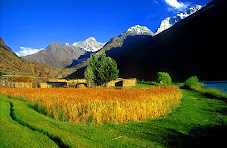
Kishmanja, a beautiful village in Yarkhun valley
Lush green
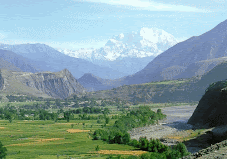
DIZG: threatened by floods
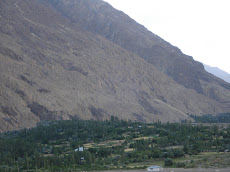
The legendary village of Ayun in Chitral
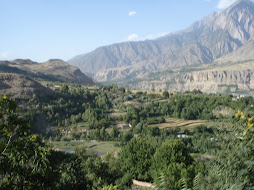
On way to Bumburet
Dizg, Yarkhun
About Me
- Zar Alam Khan Razakhel
- Village Dizg, Yarkhun valley, Chitral, Pakistan
- I blog at http://chitraltoday.net (ChitralToday) about Chitral, its people, culture, traditions and issues. I have been writing about Chitral since 2000. Chitral is a scenic valley in the extreme north-west of Pakistan.