Monday, June 8, 2009
Chitral Today
For full and up to date coverage of Chitral, please log on to chitraltoday.com. thanks

Delay in rebuilding of Yarkhun bridge makes over 40,000 people hemmed in
Dawn
By Zar Alam Khan
ISLAMABAD: The government’s failure to reconstruct a bridge in a far-off valley of Chitral has left its over 40,000 residents stranded for the fourth consecutive summer this year.
The bridge on the Yarkhun river near Khotanlasht was constructed in 1980 but it collapsed in August 2006 due to lack of maintenance cutting off the over 100-km-long valley of over 50 scattered villages stretching up to the Boroghil Pass bordering the Wakhan corridor of Afghanistan.
As a result, the area has been facing a crisis-like situation in the absence of supplies of essential commodities and basic healthcare facilities. Ironically, there is even no basic healthcare centre in the entire valley and a dispensary set up in the Dizg village was also closed down a few years ago. The worse affected are patients needing emergency medical treatment including aged people, women and children. Besides, due to absence of transport, people have to travel on foot from the destroyed bridge to reach their villages and vice versa.
Hundreds of students including girls from the four villages near the collapsed bridge have to attend their schools situated in Brep village across the river. When the bridge collapsed, they remained out of school for three months till a pedestrian bridge was set up at the site. Crossing the dangling and quite long suspension bridge is like playing with one’s life. Early in the morning and in the afternoon, crowds of students can be seen on the bank of the river waiting for their turn to cross the bridge one by one, as the bridge is also used by other people and for shifting of luggage, etc. The residents said they had been going through mental distress and were also concerned about the safety of their children. One person has already lost his life while crossing the river.
Though the reconstruction of the bridge could take hardly one or two months, too many political stakeholders have complicated the matter to achieve their own vested interest making the residents suffer. As the area is far off and has no communication links, the affected people’s pleas after pleas for resolution of the problem have fell on deaf ears despite the fact that their political representatives had made promises to reconstruct the bridge on many occasions.
During the last about three years, every political party hoodwinked the people and sent contractors to the site who carried out some groundwork that too by fits and starts and then disappeared. So far, work on the project has been started and closed for fourth time but there is no hope that the work presently going on at a snail’s pace at the site would be completed any time soon.
When the bridge was washed away, the then provincial government of the MMA deliberately put the project into the cold storage and did not release the required funds on time. However, MMA’s successors in the province turned out to be more callous and did the same with the project. In the 2008 elections, the PML-Q candidates Shahzada Mohiuddin and Ghulam Mohammad returned to the National and the provincial assemblies mainly through the votes of the Yarkhun valley after promising to reconstruct the bridge as a priority project. But after reaching the assemblies, these two leaders have also been buying time on one pretext or the other. Instead of ensuring the reconstruction of the bridge, the MPA made it a publicity opportunity and proudly opened a plaque in his name on April 21, 2008, declaring that work on reconstruction of the bridge has been started. Had there been political will to resolve the public issue, the bridge would have so far been reconstructed, regretted the residents.
Saturday, May 23, 2009
The last breaths of Kalasha language in Kalkatak of Chitral
By Fakhruddin
According to linguistic experts, 6,000 languages in the world will reduce to half in the middle of this century if language shifting continued in the same rate as it is now. Speakers of a minority language shift to a majority language due to many reasons.
In our county, a number of languages are endangered. Kalasha is one of them. Kalasha, the language spoken by a minority in Chitral, is threatened of extinction because its speakers are adopting the major language of Chitral, Khowar. The best example of this shift is the village of Kalkatak in southern Chitral. The inhabitants of Kalkatak have changed their mother-tongue three times during the last century.
They gave up Kalasha, adopted Palula, and then abandoned Palula for Khowar. Now, the last remnants of the Kalasha language will soon disappear from the village.
At the beginning of the last century, the language of Kalkatak was Kalasha, an Indo-Aryan language; and the language of an ancient tribe also called Kalasha, which today lives in three valleys in Chitral, Bumboret, Rumbur and Birir. There are only about a dozen elderly people living in Kalkatak who still know Kalasha, but they do not like to speak it. The Kalasha language will be extinct from the village with the death of this handful of people.
Muhammad Wali Shah, an elderly man of 72, says: "The people with whom I used to speak Kalasha in my childhood, do not like to speak it now". He added that until 60s, he could still find some company with whom to speak the language, but after that no one likes to converse in the language.
Kalasha was still dominant in the village in the 30s. No one had yet left it for Palula or Khowar, and some non-Kalasha speakers had even learnt it. Salah Khan, another elderly man, says: "My father was a Khowar speaker who immigrated to the village from Madak and married a Kalasha woman of the village. There was Kalasha in my home and this is why I know Kalasha".
Rahim Khan, a man of 40 and a son of Kalasha parents, does not know Kalasha at all, but speaks Palula. He says "I learnt Kalasha from my parents along with Palula and Khowar in my childhood, but later on I forgot the language, since Palula was so dominating." He speaks Palula with his children.
The people of Kalkatak gave up Kalasha because they felt inferior, and because it was easy to adopt other languages. In the time of the Kator ruler, all Kalasha of the area were in the Rayat class -- the lowest class. The people of the upper classes were using 'Kalash' as a derogatory term for the people. The people were hesitant to speak the language in front of Khowar speakers. The difficulties increased further when a fort was constructed in the village in 1930 for the son of a Khowar-speaking ruler, and many Khowar speakers came to the village with the prince.
Wasim Khan, born in 1937, says: "The people of Kalkatak gave up Kalasha because they felt inferior. Other tribes in the area considered the Kalasha inferior in status, and because of the Kalasha language this inferiority was more visible. The people of Kalkatak thought that people considered them inferior because they spoke Kalasha."
The villagers already knew Palula and Khowar along with their mother tongue and they had no difficulty in adopting either of these languages. The interaction and intermarriage of the villagers with Palula speakers from the Biori valley had already made them fluent in Palula. For a long time they were speaking these languages along with Kalasha.
Khoshani, an old lady of the village, says: "My parents were Kalasha speakers and my mother-tongue was Kalasha. I used to speak Kalasha as long as I was with my parents. I stopped it when I married and began to speak Palula. My mother-in-law was a Palula speaker from Biori and the language in my parents-in-laws' house was Palula."
Muhammad Salim, an influential Kalasha man, migrated to Biori Valley with his family to protect himself from enforced labour under the mehtar. He stayed there for a long time and came back to the village with the Palula language. His children spoke Palula. The summer-pastures of the villager also lie at the eastern end of the Biori valley. The people of Kalkatak had to go through the valley with their goats in order to get there. The shepherds of both language communities had a lot of interaction with each other while in the pastures.
The inhabitants of a small village called Serdur, near Kalkatak, are immigrants from Biori. They have been there for three generations. They still speak Palula, and depend on Kalkatak for many things. Until recently, they had no graveyard or Mosque, and they still come to Kalkatak for the Eid prayers.
To the people of Kalkatak, 'Kalasha' was a term not only used for a language but also for a tribe who were considered inferior, and, perhaps more importantly, for a religion which was considered infidel. To them, speaking Kalasha meant being perceived as inferior and infidel. Although the people of Kalkatak had given up the Kalasha religion long ago, they had kept the language.
Meanwhile, the Kalasha of Suwir - a village across the river to the west of Kalkatak - took an oath never again to speak Kalasha. The villagers collectively gave up the language. This must have had a great effect on the people of kalkatak.
The Kalasha language is taking its last breath in the village of Kalkatak. The few speakers of Kalasha in the village are in their seventies. With the death of these people the last symbol of the Kalasha tradition will disappear from the village forever.
According to linguistic experts, 6,000 languages in the world will reduce to half in the middle of this century if language shifting continued in the same rate as it is now. Speakers of a minority language shift to a majority language due to many reasons.
In our county, a number of languages are endangered. Kalasha is one of them. Kalasha, the language spoken by a minority in Chitral, is threatened of extinction because its speakers are adopting the major language of Chitral, Khowar. The best example of this shift is the village of Kalkatak in southern Chitral. The inhabitants of Kalkatak have changed their mother-tongue three times during the last century.
They gave up Kalasha, adopted Palula, and then abandoned Palula for Khowar. Now, the last remnants of the Kalasha language will soon disappear from the village.
At the beginning of the last century, the language of Kalkatak was Kalasha, an Indo-Aryan language; and the language of an ancient tribe also called Kalasha, which today lives in three valleys in Chitral, Bumboret, Rumbur and Birir. There are only about a dozen elderly people living in Kalkatak who still know Kalasha, but they do not like to speak it. The Kalasha language will be extinct from the village with the death of this handful of people.
Muhammad Wali Shah, an elderly man of 72, says: "The people with whom I used to speak Kalasha in my childhood, do not like to speak it now". He added that until 60s, he could still find some company with whom to speak the language, but after that no one likes to converse in the language.
Kalasha was still dominant in the village in the 30s. No one had yet left it for Palula or Khowar, and some non-Kalasha speakers had even learnt it. Salah Khan, another elderly man, says: "My father was a Khowar speaker who immigrated to the village from Madak and married a Kalasha woman of the village. There was Kalasha in my home and this is why I know Kalasha".
Rahim Khan, a man of 40 and a son of Kalasha parents, does not know Kalasha at all, but speaks Palula. He says "I learnt Kalasha from my parents along with Palula and Khowar in my childhood, but later on I forgot the language, since Palula was so dominating." He speaks Palula with his children.
The people of Kalkatak gave up Kalasha because they felt inferior, and because it was easy to adopt other languages. In the time of the Kator ruler, all Kalasha of the area were in the Rayat class -- the lowest class. The people of the upper classes were using 'Kalash' as a derogatory term for the people. The people were hesitant to speak the language in front of Khowar speakers. The difficulties increased further when a fort was constructed in the village in 1930 for the son of a Khowar-speaking ruler, and many Khowar speakers came to the village with the prince.
Wasim Khan, born in 1937, says: "The people of Kalkatak gave up Kalasha because they felt inferior. Other tribes in the area considered the Kalasha inferior in status, and because of the Kalasha language this inferiority was more visible. The people of Kalkatak thought that people considered them inferior because they spoke Kalasha."
The villagers already knew Palula and Khowar along with their mother tongue and they had no difficulty in adopting either of these languages. The interaction and intermarriage of the villagers with Palula speakers from the Biori valley had already made them fluent in Palula. For a long time they were speaking these languages along with Kalasha.
Khoshani, an old lady of the village, says: "My parents were Kalasha speakers and my mother-tongue was Kalasha. I used to speak Kalasha as long as I was with my parents. I stopped it when I married and began to speak Palula. My mother-in-law was a Palula speaker from Biori and the language in my parents-in-laws' house was Palula."
Muhammad Salim, an influential Kalasha man, migrated to Biori Valley with his family to protect himself from enforced labour under the mehtar. He stayed there for a long time and came back to the village with the Palula language. His children spoke Palula. The summer-pastures of the villager also lie at the eastern end of the Biori valley. The people of Kalkatak had to go through the valley with their goats in order to get there. The shepherds of both language communities had a lot of interaction with each other while in the pastures.
The inhabitants of a small village called Serdur, near Kalkatak, are immigrants from Biori. They have been there for three generations. They still speak Palula, and depend on Kalkatak for many things. Until recently, they had no graveyard or Mosque, and they still come to Kalkatak for the Eid prayers.
To the people of Kalkatak, 'Kalasha' was a term not only used for a language but also for a tribe who were considered inferior, and, perhaps more importantly, for a religion which was considered infidel. To them, speaking Kalasha meant being perceived as inferior and infidel. Although the people of Kalkatak had given up the Kalasha religion long ago, they had kept the language.
Meanwhile, the Kalasha of Suwir - a village across the river to the west of Kalkatak - took an oath never again to speak Kalasha. The villagers collectively gave up the language. This must have had a great effect on the people of kalkatak.
The Kalasha language is taking its last breath in the village of Kalkatak. The few speakers of Kalasha in the village are in their seventies. With the death of these people the last symbol of the Kalasha tradition will disappear from the village forever.
Tuesday, May 19, 2009
Sambu co. offered Rs50m for continuing work on Lowari Tunnel
By Zulfiqar Ahmad
ISLAMABAD: The government has offered an amount of Rs50 million in addition to the project cost to the South Korean construction company working at the Lowari Tunnel to change its plan to wind up due to security concerns.
Initially, the total cost of the project was Rs8 billion but it was increased when the Korean company conveyed its apprehensions to the government that they had to abandon the project due to security concerns after the launch of military operation in Dir and other parts of Malakand division, sources told this reporter on Tuesday.
Resultantly, the government increased the project cost taking into account the security expenses and shifted the engineers and consultants of the company to Islamabad till normalization of the situation, sources revealed.
They said the company was going to suspend work at the tunnel permanently if the government did not take appropriate action on time.
“The company has also asked the government to arrange two choppers stationed on both sides of the tunnel to shift the manpower in case of any emergency,” sources said.
They further added that the government had assured foolproof security for the company’s workforce till work at the tunnel is completed.
The drilling at the 8.8KM long, 7.15 metres high and 7.55 meters wide tunnel has been completed, while rail track is being laid and the work will be completed by the end of the current year.
ISLAMABAD: The government has offered an amount of Rs50 million in addition to the project cost to the South Korean construction company working at the Lowari Tunnel to change its plan to wind up due to security concerns.
Initially, the total cost of the project was Rs8 billion but it was increased when the Korean company conveyed its apprehensions to the government that they had to abandon the project due to security concerns after the launch of military operation in Dir and other parts of Malakand division, sources told this reporter on Tuesday.
Resultantly, the government increased the project cost taking into account the security expenses and shifted the engineers and consultants of the company to Islamabad till normalization of the situation, sources revealed.
They said the company was going to suspend work at the tunnel permanently if the government did not take appropriate action on time.
“The company has also asked the government to arrange two choppers stationed on both sides of the tunnel to shift the manpower in case of any emergency,” sources said.
They further added that the government had assured foolproof security for the company’s workforce till work at the tunnel is completed.
The drilling at the 8.8KM long, 7.15 metres high and 7.55 meters wide tunnel has been completed, while rail track is being laid and the work will be completed by the end of the current year.
Tuesday, May 12, 2009
No doctors in Mastuj; AKHS accused of overcharging
Report GH Farooqui
CHITRAL: Speakers at a workshop here strongly condemned the health department for its continuous failure to appoint a doctor at the Rural Health Centre of Mastuj despite the fact that four posts of doctors were sanctioned for the centre.
The one-day workshop on human rights was organized by Easy and Equitable Access to Justice Program for Women, a project of Legal Awareness Program for Human Rights (LAPH), in collaboration with the Human Rights Monitoring Committee, Mastuj.
The speakers said the health department had no regard for people's problems and was ignoring their requests to appoint doctors in the whole area. They said there was no lady doctor in the area and the residents were compelled to rush their women to the Aga Khan Medical Centre at Booni in times of emergency.
But they regretted that most of the time the patients died on their way before reaching the hospital due to the dilapidated condition of the road.
On the other hand, they also alleged that taking undue benefit of the situation, the the Aga Khan Health Service's medical center at Booni was overcharging the poor patients.
The workshop was presided over by Abdul Rehman, a social worker from Mastuj.
Chairman Board of Director LAPH Niaz Ali Shah said his organization was working for uplift of humanity especially for protection of women's rights. He said LAPH arranged seminars and workshops for raising awareness among the masses regarding human rights.
He said they also supported widows for their rehabilitation and helped poor students in order to decrease the dropt-out ratio besides providing free legal assistance to poor and helpless women. For this purpose, they have opened three free legal aid centers which help oppressed segment of society.
He thanked Tehsil Nazim Chitral Sartaj Ahmad Khan for his support for protecting human rights.
He said there was great discrimination in different agencies and women were totally being ignored. He said there are only 135 schools for girls in the valley and for boys the number was 565; there are 606 female teachers against 1,827 male teachers; a male doctor has to check up to 4,000 patients but a lady doctor has to see over 40,000 patients.
Those who spoke on the occasion were Haji Imatuddin, Nazir Shah, Bibi Saliha, Salahuddin, Muhiuddin and Shakira Naz.
CHITRAL: Speakers at a workshop here strongly condemned the health department for its continuous failure to appoint a doctor at the Rural Health Centre of Mastuj despite the fact that four posts of doctors were sanctioned for the centre.
The one-day workshop on human rights was organized by Easy and Equitable Access to Justice Program for Women, a project of Legal Awareness Program for Human Rights (LAPH), in collaboration with the Human Rights Monitoring Committee, Mastuj.
The speakers said the health department had no regard for people's problems and was ignoring their requests to appoint doctors in the whole area. They said there was no lady doctor in the area and the residents were compelled to rush their women to the Aga Khan Medical Centre at Booni in times of emergency.
But they regretted that most of the time the patients died on their way before reaching the hospital due to the dilapidated condition of the road.
On the other hand, they also alleged that taking undue benefit of the situation, the the Aga Khan Health Service's medical center at Booni was overcharging the poor patients.
The workshop was presided over by Abdul Rehman, a social worker from Mastuj.
Chairman Board of Director LAPH Niaz Ali Shah said his organization was working for uplift of humanity especially for protection of women's rights. He said LAPH arranged seminars and workshops for raising awareness among the masses regarding human rights.
He said they also supported widows for their rehabilitation and helped poor students in order to decrease the dropt-out ratio besides providing free legal assistance to poor and helpless women. For this purpose, they have opened three free legal aid centers which help oppressed segment of society.
He thanked Tehsil Nazim Chitral Sartaj Ahmad Khan for his support for protecting human rights.
He said there was great discrimination in different agencies and women were totally being ignored. He said there are only 135 schools for girls in the valley and for boys the number was 565; there are 606 female teachers against 1,827 male teachers; a male doctor has to check up to 4,000 patients but a lady doctor has to see over 40,000 patients.
Those who spoke on the occasion were Haji Imatuddin, Nazir Shah, Bibi Saliha, Salahuddin, Muhiuddin and Shakira Naz.
Friday, May 8, 2009
Two more Chitralis killed in Lower Dir
ISLAMABAD: Two more Chitralis have been killed during the ongoing military operation in Maidan area of Lower Dir, reports said.
One of the victims, who belonged to Laspur valley, worked for the Northern Light Infantry (NLI) regiment. His body has been transferred to Peshawar for onward dispatch to his native village. But due to unavailability of flights it could not reach Chitral on Friday.
The second victim was identified as Hashmi Ali, a resident of Morder, and a jawan of Chitarl Scouts.
Nine personnel of Chitral Scouts had also been killed in the same area recently.
One of the victims, who belonged to Laspur valley, worked for the Northern Light Infantry (NLI) regiment. His body has been transferred to Peshawar for onward dispatch to his native village. But due to unavailability of flights it could not reach Chitral on Friday.
The second victim was identified as Hashmi Ali, a resident of Morder, and a jawan of Chitarl Scouts.
Nine personnel of Chitral Scouts had also been killed in the same area recently.
Tuesday, May 5, 2009
Chitrali baby's life saved at Pims
By Zar Alam Khan
ISLAMABAD: The life of a newborn baby born to a couple in a Chitral village with a major congenital deformity in the passageway from mouth to stomach was saved after an operation at the Pakistan Institute of Medical Sciences (Pims) Islamabad.
According to Bulbul Hussain, a resident of Bakarabad in Chitral, when the condition of his son deteriorated soon after birth, local doctors told him to take the baby to a major hospital immediately. The parents took the baby to SherpaoHospital in Peshawar where he was diagnosed with tracheoesophageal fistula with esophageal atresia (a condition in which the passageway from the mouth to stomach is not formed and has communication through the airway).
However, considering the seriousness of the case, the doctors at the Peshawar hospital referred the baby to Pims in a critical condition.
The baby was admitted to the paediatrics surgery ward at the Pims for two days after which he was operated upon by a team of pediatric surgeons, including Associate Professor Dr M. Amjad Chaudhry and Dr Saifullah Khan.
Dr Saifullah, who is also a resident of Birzoz village in the Yarkhun valley of Chitral, told this correspondent on Tuesday that after the operation the baby was doing well and had been discharged from the hospital. He said this could be the first case of its nature in the medical history of Chitral.
ISLAMABAD: The life of a newborn baby born to a couple in a Chitral village with a major congenital deformity in the passageway from mouth to stomach was saved after an operation at the Pakistan Institute of Medical Sciences (Pims) Islamabad.
According to Bulbul Hussain, a resident of Bakarabad in Chitral, when the condition of his son deteriorated soon after birth, local doctors told him to take the baby to a major hospital immediately. The parents took the baby to SherpaoHospital in Peshawar where he was diagnosed with tracheoesophageal fistula with esophageal atresia (a condition in which the passageway from the mouth to stomach is not formed and has communication through the airway).
However, considering the seriousness of the case, the doctors at the Peshawar hospital referred the baby to Pims in a critical condition.
The baby was admitted to the paediatrics surgery ward at the Pims for two days after which he was operated upon by a team of pediatric surgeons, including Associate Professor Dr M. Amjad Chaudhry and Dr Saifullah Khan.
Dr Saifullah, who is also a resident of Birzoz village in the Yarkhun valley of Chitral, told this correspondent on Tuesday that after the operation the baby was doing well and had been discharged from the hospital. He said this could be the first case of its nature in the medical history of Chitral.
Subscribe to:
Posts (Atom)
Awesome and rugged

Beauty of Chitral
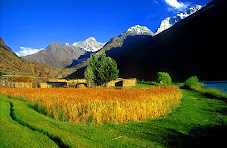
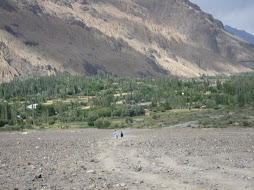
Kishmanja, a beautiful village in Yarkhun valley
Lush green
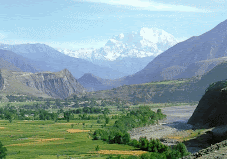
DIZG: threatened by floods
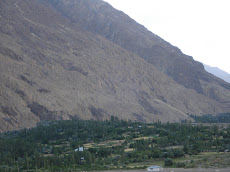
The legendary village of Ayun in Chitral
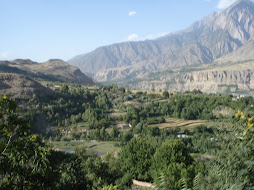
On way to Bumburet
Dizg, Yarkhun
About Me
- Zar Alam Khan Razakhel
- Village Dizg, Yarkhun valley, Chitral, Pakistan
- I blog at http://chitraltoday.net (ChitralToday) about Chitral, its people, culture, traditions and issues. I have been writing about Chitral since 2000. Chitral is a scenic valley in the extreme north-west of Pakistan.