From Chitral Today (chitraltoday.com).
By Shafiqur Rehman
Gender refers to socially constructed roles and responsibilities of women and men. The difference in roles and responsibilities among women and men stems from our families, societies and culture (Chaudhry, 2009). The concept of gender includes our expectations about the characteristics, attitudes and behaviors of women and men. The different roles, rights and resources that both the genders have in society are important determinants of the nature and scope of their inequality and poverty. Inequality in access to resources between women and men is most common in poor and developing countries. Gender inequality/discrimination refers to inequality in conditions among women and men for realizing their human rights.
In Pakistan, home has been defined as women legitimate ideological and physical space where she performs her practical role as a mother and wife, while a man dominates the world outside the home and performs his productive role as a bread winner. Men and women are conceptually divided into two separate worlds. The household resources are allocated in the favor of sons due to their productive role. Male members of the family are given better education and are equipped with skills to compete for resources in public field (ADB, 2000), while female members are imparted domestic skills to be good mothers and wives. They are given limited opportunities to create choices for themselves in order to change the realities of their lives.
Pakistan shows gender inequality in education. Therefore, strong gender disparities exist in educational attainment between rural and urban areas and among the provinces in Pakistan (ADB, 2000). Pakistan is a patriarchal society, where women suffer all sorts of discrimination, resulting in low social, economic and political status in the society. According to the UNDP (1999), gender gap is increasing in all social sectors of Pakistan. Pakistan ranks 120 in 146 countries in terms of gender- related development index, and in terms of gender empowerment measurement ranking, it ranks 92 in 94 countries. Gender inequality in education can be measured by looking the Gross and net enrollment rates and completion and drop rates. Cultural limitations discourage parents from sending their daughters to mixed gender schools (NEP, 2007). However, the problem is not just of demand. There have been situations where girls are enrolled in boys’ schools even up to matric level, indicating that supply of quality girls schooling is falling short. Similarly, poor physical environment or lack of basic facilities in schools also discourages parents from sending their girls to schools.
According to National Educational Policy of Pakistan (2007), the educational status of women in Pakistan is unacceptably low, in fact, amongst the lowest in the world. The problem emanates at the primary level, as low participation and high dropouts at that stage prevent females from reaching higher education and equitable opportunities for such furtherance do not become available to the female gender. According to the Ministry of Women Development (2007) cited in NEP( 2007), only 19% of females have attained education up to Matric, 8% up to Intermediate, 5% a Bachelor’s degree and 1.4% achieved a Master’s degree. 60% of the female adult population is illiterate. Of the 3.3 million out of school children, 2.503 million are girls. 73.6% of primary age girls attend school, compared with 92.1% of boys. Moreover, a sizeable majority of rural girls drop out of primary schools.
Women in Pakistan do not form a homogeneous entity; their opportunities vary greatly with the social system that they are part of. In rural areas, patriarchal structures often combine with poverty to limit opportunities for women (NEP, 2007), while women belonging to the upper and middle classes have increasingly greater access to education and employment opportunities and can assume greater control over their lives. Educated and professional women in urban areas and from upper classes of the society enjoy much better status and rights than illiterate women in rural areas of Pakistan. Women in tribal areas of Balochistan, Khyber Pakhtunkhwa province and remote areas of southern Punjab and Interior Sindh live in more unpleasant social conditions than women in other parts of the country (PESFD, 2006-07). In rural areas, women are discouraged in attaining higher education just for the sake of avoiding the time when women can lead man, while in urban areas women are encouraged to get education, so girls actively join the professional and technical courses. But after getting technically and professionally qualified they are not allowed permission to work, this is the reason we don’t find females at offices as much as we find males. This is the major drawback as it leads a nation towards economic disaster as half the nation in the form of females if won’t participate in economic activities and hence their professional qualification goes in the bin (UNDP, 1998). Girls excel in academics so more girls avail admissions in medical colleges. But, after getting qualified as M.B.S.S, majority girls do not practice due to our social issues.
In villages girls are usually not asked whom do they want to marry; parents just fix their wedding of their daughters to the groom of their choice. Sometime for land and money parents fix the wedding of their young girl to an old man. It has been observed that if a couple is involved in some unethical practice, people points the girl only, while boy is never considered guilty. If a female marries twice or thrice, she is considered awful, while the case is totally different in the case of the male. Divorced lady is treated in the same manner. Today’s life is male oriented. Females face gender discrimination everywhere. Discrimination is generated when the balance is not found. What to blame other people, when parents themselves initiate gender disparity. Some parents only send their sons to schools while some send their sons and daughters both to schools but they put boys in good schools and girls in government local schools (Chaudhry, 2009). Some forward-thinking people send both their sons and daughters to good schools but at the time of sending children abroad, they discriminate and send their sons at first place.
Women’s lower social, economic, and cultural standing results in the low health and educational status of women. Social and familial control over women’s sexuality, their economic dependence on men, and restrictions on their mobility determine differential access of males and females to health services. Intra-household bias in food distribution leads to nutritional deficiencies among female children. Early marriages of girls, excessive childbearing, lack of control over their own bodies, and a high level of illiteracy adversely affect women’s health. Institutionalized gender bias within the health service delivery system in terms of lack of female service providers, and neglect of women’s basic and reproductive health needs, intensify women’s disadvantaged health status (ADB, 2000). Strong gender disparities exist in educational attainment between rural and urban areas and among the provinces. In 1996–1997 the literacy rate in urban areas was 58.3 percent while in rural areas it was 28.3 percent, and only 12 percent among rural women. There are also considerable inequalities in literacy rates among the four provinces, especially disparities between men and women (ADB, 2000).
Education is the most important instrument for human resource development (Chaudhry, 2009). It has become a universal human right and an important component of opportunities and empowerment of women. A large number of empirical studies (World Bank, 2007 & Schultz, 2002) find that increase in women’s education boosts their wages and that returns to education for women are frequently larger than that of men. There are also many empirical evidences that, increase in female education improves human development outcomes such as child survival, health and schooling (World Bank, 2001). Klasen (2002) explored that lower female education had a negative impact on economic growth as it lowered the average level of human capital. According to Knowles (2002), in developing countries female education reduces fertility, infant mortality and increases in children’s education.
Government of Pakistan makes amendments in the Constitution and promulgation of Local Government Ordinance, 2001; at least 33 percent of seats in each tier of local government are women. In the National Assembly, more than 60 seats are held by women out of 332 seats while over 128 seats are held by women out of 728 seats in the provincial assemblies. Similarly, there are 17 women in the Senate out of 100 members (Perveen & Rakhshinda, 2005). While most of these women have been elected on reserved seats, some have won on general seats. Women participation in politics as voters, candidates and political activists is increasing. Representation by women is better than in most countries of the world, including the largest democracies of the world. This provides a good opportunity to address the gender gap in the education, social, economic and health sectors. Now there is a growing realization at the policy making level of the government that gender disparities and inequalities cannot be accepted and government has initiated a number of programs/projects and taken practical steps to reduce gender inequalities.
—The writer is an MEd student at AKU-IED Karachi
Tuesday, April 12, 2011

Who can steer PPP out of crisis?
Chitral Today (chitraltoday.com)
ISLAMABAD, April 12, 2011: Leg-pulling and wrangling continue in the Pakistan People’s Party (PPP) Chitral about nomination of its office-bearers. For the last many decades, the PPP has been in disarray in Chitral mainly due to lack of leadership and groupings among its cadres.
This was the reason the PPP lost its vote bank in Chitral which was once considered to be its stronghold. It was also due to lack of leadership that candidates for the National Assembly seat were imported from Larkana and Karachi.
Political observers say a group of myopic people have hijacked the party at the district level and due to their self-interest and infighting; energetic, educated and sincere people commanding people’s confidence and political influence remained on the back burner - always discouraged to come forward and steer the party out of the crisis.
They referred to reaction of the local PPP leadership to the announcement of Pakistan Muslim League (PML-Q) MNA Shahzada Mohiuddin to join the party in Aug 2008.
"The local leaders of the PPP saw their political demise in Mr Mohiuddin’s joining the PPP and they launched a campaign from the district as well as the provincial level saying the 'PPP has no room for any prince.'”
This was despite the fact the Mr Mohiuddin was not interested to stand candidate for the posts of PPP’s district president or the secretary general, said the observers.
The MNA said PPP workers and activists in Chitral had welcomed his decision to join the party. He said he had strong vote bank in the valley and since 1985 he had been elected twice chairman district council, once district nazim and four time member National Assembly.
“The area has also been a stronghold of the PPP but due to lack of leadership the party has been losing ground and my joining of the party would have strengthened it at the grassroots level,” he added.
Shahzada Mohiuddin that said during a meeting with President Asif Ali Zardari and Prime Minister Gilani in Aug 2008, he had been requested to join and support the PPP. On this, Mr Mohiuddin said he had agreed to join the PPP and nominate his son Khalid Pervez to lead the party at the district level till the defection clause in the constitution was changed. However, he said, it did not go well with the so-called PPP leaders in Chitral who started a campaign against his joining the party.
He said it would be an insult for him to approach the local PPP leaders and the party’s provincial president Zahir Shah for getting their consent before joining the party. He said he had strong political support in Chitral and had nominated his son to lead the party of Pervez Musharraf and challenge his opponents in the coming election.--chitraltoday.com
ISLAMABAD, April 12, 2011: Leg-pulling and wrangling continue in the Pakistan People’s Party (PPP) Chitral about nomination of its office-bearers. For the last many decades, the PPP has been in disarray in Chitral mainly due to lack of leadership and groupings among its cadres.
This was the reason the PPP lost its vote bank in Chitral which was once considered to be its stronghold. It was also due to lack of leadership that candidates for the National Assembly seat were imported from Larkana and Karachi.
Political observers say a group of myopic people have hijacked the party at the district level and due to their self-interest and infighting; energetic, educated and sincere people commanding people’s confidence and political influence remained on the back burner - always discouraged to come forward and steer the party out of the crisis.
They referred to reaction of the local PPP leadership to the announcement of Pakistan Muslim League (PML-Q) MNA Shahzada Mohiuddin to join the party in Aug 2008.
"The local leaders of the PPP saw their political demise in Mr Mohiuddin’s joining the PPP and they launched a campaign from the district as well as the provincial level saying the 'PPP has no room for any prince.'”
This was despite the fact the Mr Mohiuddin was not interested to stand candidate for the posts of PPP’s district president or the secretary general, said the observers.
The MNA said PPP workers and activists in Chitral had welcomed his decision to join the party. He said he had strong vote bank in the valley and since 1985 he had been elected twice chairman district council, once district nazim and four time member National Assembly.
“The area has also been a stronghold of the PPP but due to lack of leadership the party has been losing ground and my joining of the party would have strengthened it at the grassroots level,” he added.
Shahzada Mohiuddin that said during a meeting with President Asif Ali Zardari and Prime Minister Gilani in Aug 2008, he had been requested to join and support the PPP. On this, Mr Mohiuddin said he had agreed to join the PPP and nominate his son Khalid Pervez to lead the party at the district level till the defection clause in the constitution was changed. However, he said, it did not go well with the so-called PPP leaders in Chitral who started a campaign against his joining the party.
He said it would be an insult for him to approach the local PPP leaders and the party’s provincial president Zahir Shah for getting their consent before joining the party. He said he had strong political support in Chitral and had nominated his son to lead the party of Pervez Musharraf and challenge his opponents in the coming election.--chitraltoday.com
Kagh Lasht Festival from 14th
Chitral Today Report
CHITRAL, April 10, 2011: The three-day Kagh Lasht Festival will start from April 14 (Thursday).
The event held every year since time immemorial is to welcome the arrival of spring season in the area. This year’s festival is being organized by the Sarhad Tourism Corporation (STC).
DCO Rehmatullah Wazir said the event would feature competition of local folk sports including polo besides contributing a lot towards revival and rejuvenation of the local culture.
He said tug-of-war, weight-lifting and throwing, firing with obsolete and outdated weapons, mountain race and many other local sports would form the chart of competitions during the festival.
He said the polo matches between the teams of different valleys were enthusiastically watched by the people as they thronged the venue to encourage their respective teams.
He said 12-km-long and three-km-wide plateau of Kagh Lasht offered an eye-catching and dazzling view with the advent of spring season, adding picnickers from all parts of Chitral thronged the area.
Mr Wazir said the tourism potential of the area needed to be exploited to attract maximum number of tourists, adding the Sarhad Tourism Corporation had heeded their request to patronize the Kagh Lasht festival.
He said that efforts were being made to advertise the venue as the popular picnic spot during the spring season where all the basic facilities would be provided to the tourists.--Zahiruddin
CHITRAL, April 10, 2011: The three-day Kagh Lasht Festival will start from April 14 (Thursday).
The event held every year since time immemorial is to welcome the arrival of spring season in the area. This year’s festival is being organized by the Sarhad Tourism Corporation (STC).
DCO Rehmatullah Wazir said the event would feature competition of local folk sports including polo besides contributing a lot towards revival and rejuvenation of the local culture.
He said tug-of-war, weight-lifting and throwing, firing with obsolete and outdated weapons, mountain race and many other local sports would form the chart of competitions during the festival.
He said the polo matches between the teams of different valleys were enthusiastically watched by the people as they thronged the venue to encourage their respective teams.
He said 12-km-long and three-km-wide plateau of Kagh Lasht offered an eye-catching and dazzling view with the advent of spring season, adding picnickers from all parts of Chitral thronged the area.
Mr Wazir said the tourism potential of the area needed to be exploited to attract maximum number of tourists, adding the Sarhad Tourism Corporation had heeded their request to patronize the Kagh Lasht festival.
He said that efforts were being made to advertise the venue as the popular picnic spot during the spring season where all the basic facilities would be provided to the tourists.--Zahiruddin
Monday, April 12, 2010
Are Chitralis indifferent to the new name?
By Zar Alam Khan
ISLAMABAD, April 11, 2010: As the protest against the renaming of NWFP as Khyber-Pakhtunkhwa continues in the Hazara Division, the other non-Pashtun areas, especially Chitral, have largely been indifferent to the issue.
Most of the people of Chitral contacted for comments by Dawn were of the view that the renaming of the province was not an issue as there were already plenty of problems needing resolution on a priority basis. However, they said the Pashtoon people, who were in majority in the province, had the right to rename the province as they wished.
Pakistan Muslim League (PML-Q) MNA from Chitral Shahzada Mohiyuddin did not raise any voice against the renaming of the province in the National Assembly. He even objected to a remark by an MNA from Abbottabad that the people of Chitral were also against the renaming of the province as Khyber-Pakhtunkhwa. On a point of order, Mr Mohiyuddin clarified that though the people of Chitral did not speak Pashto and have a distinct cultural identity, they were not against the renaming of the province as Khyber- Pakhtunkhwa.
However, Jamaat-i-Islami leader and former MNA Maulana Abdul Akbar Chitrali expressed concern over the way the provincial and federal governments had renamed the province without taking non-Pashtoon groups into confidence. He said Chitral was inhabited by over 0.6 million people who spoke the Khowar language. He said the political representatives of Chitral should have been taken onboard. “This unilateral decision of the government threatens the very existence of all the non-Pashtoon groups besides creating ethnic polarisation in the province,” he maintained.
Meanwhile, the youth of Chitral have opposed the renaming of the province saying it threatened the identity and survival of the non-Pashtoon people.
Talking to Dawn, Idrees Hayat, the chairman of Chitral Students Welfare Organisation (CSWO), said the silence of Chitralis should not be taken as a sign of weakness. “It is not the nature of Chitralis to make hue and cry; we are a peaceful people, but let it be known to all that the vast majority of the people of Chitral are against the renaming of NWFP as Khyber-Pakhtunkhwa.”
He said the Pashtoons and Khow people of Chitral have lived together in peace and harmony, but the fact of the matter is that we are not Pashtoons and are against the renaming of NWFP as Khyber-Pakhtunkhwa. “We wholeheartedly support the people of Hazara in their stand against the unjust renaming of our province.”
He said the areas inhabited by non-Pashto speaking people like Chitral, Hazara, Kohistan and Dera Ismail Khan collectively formed majority of the land of NWFP. He said the renaming of the ethnically and geographically diverse province after one group of people was an injustice with the other groups.
A number of residents of Chitral while talking to Dawn said Chitral was one of the princely states that were the first to join Pakistan in 1947. They said Quaid-i-Azam Mohammad Ali Jinnah had assured the then Mehtar (ruler) of Chitral that the government of Pakistan would not interfere in the internal affairs of the princely state. “However, soon after the death of the Quaid, the rulers started indulging in conspiracies and in 1969 merged the area into the NWFP as a district without taking the local people into confidence or promising to ensure their socio-economic and cultural well being.
“Since then we have faced all types of discrimination and injustices. Today Chitral remains one of the most backward and neglected areas of the country despite the fact that it possesses abundant natural and human resources,” they added.
They said in order to promote and protect their socio-economic interests and cultural identity, Chitral should either be given under the direct administrative control of the federal government or merged into Gilgit-Baltistan.--Dawn
ISLAMABAD, April 11, 2010: As the protest against the renaming of NWFP as Khyber-Pakhtunkhwa continues in the Hazara Division, the other non-Pashtun areas, especially Chitral, have largely been indifferent to the issue.
Most of the people of Chitral contacted for comments by Dawn were of the view that the renaming of the province was not an issue as there were already plenty of problems needing resolution on a priority basis. However, they said the Pashtoon people, who were in majority in the province, had the right to rename the province as they wished.
Pakistan Muslim League (PML-Q) MNA from Chitral Shahzada Mohiyuddin did not raise any voice against the renaming of the province in the National Assembly. He even objected to a remark by an MNA from Abbottabad that the people of Chitral were also against the renaming of the province as Khyber-Pakhtunkhwa. On a point of order, Mr Mohiyuddin clarified that though the people of Chitral did not speak Pashto and have a distinct cultural identity, they were not against the renaming of the province as Khyber- Pakhtunkhwa.
However, Jamaat-i-Islami leader and former MNA Maulana Abdul Akbar Chitrali expressed concern over the way the provincial and federal governments had renamed the province without taking non-Pashtoon groups into confidence. He said Chitral was inhabited by over 0.6 million people who spoke the Khowar language. He said the political representatives of Chitral should have been taken onboard. “This unilateral decision of the government threatens the very existence of all the non-Pashtoon groups besides creating ethnic polarisation in the province,” he maintained.
Meanwhile, the youth of Chitral have opposed the renaming of the province saying it threatened the identity and survival of the non-Pashtoon people.
Talking to Dawn, Idrees Hayat, the chairman of Chitral Students Welfare Organisation (CSWO), said the silence of Chitralis should not be taken as a sign of weakness. “It is not the nature of Chitralis to make hue and cry; we are a peaceful people, but let it be known to all that the vast majority of the people of Chitral are against the renaming of NWFP as Khyber-Pakhtunkhwa.”
He said the Pashtoons and Khow people of Chitral have lived together in peace and harmony, but the fact of the matter is that we are not Pashtoons and are against the renaming of NWFP as Khyber-Pakhtunkhwa. “We wholeheartedly support the people of Hazara in their stand against the unjust renaming of our province.”
He said the areas inhabited by non-Pashto speaking people like Chitral, Hazara, Kohistan and Dera Ismail Khan collectively formed majority of the land of NWFP. He said the renaming of the ethnically and geographically diverse province after one group of people was an injustice with the other groups.
A number of residents of Chitral while talking to Dawn said Chitral was one of the princely states that were the first to join Pakistan in 1947. They said Quaid-i-Azam Mohammad Ali Jinnah had assured the then Mehtar (ruler) of Chitral that the government of Pakistan would not interfere in the internal affairs of the princely state. “However, soon after the death of the Quaid, the rulers started indulging in conspiracies and in 1969 merged the area into the NWFP as a district without taking the local people into confidence or promising to ensure their socio-economic and cultural well being.
“Since then we have faced all types of discrimination and injustices. Today Chitral remains one of the most backward and neglected areas of the country despite the fact that it possesses abundant natural and human resources,” they added.
They said in order to promote and protect their socio-economic interests and cultural identity, Chitral should either be given under the direct administrative control of the federal government or merged into Gilgit-Baltistan.--Dawn
Sunday, March 21, 2010
Literati call for projecting Chitral’s culture
By Zar Alam Khan
ISLAMABAD, March 21, 2010: Literary figures and poets from Chitral have demanded that the government should take initiatives to protect their language and culture which have long been marginalised due to lack of patronage.
They were speaking at a literary function arranged by the Khyber News television channel in collaboration with the Pakistan Academy of Letters (PAL) here on Saturday.
The speakers said Chitral was a treasure trove of ancient traditions and languages, stressing that out of about 30 languages in the NWFP, 14 were spoken in the Chitral. About 1.2 million people living in Chitral and some parts of Gilgit-Baltistan, besides many more around the world, speak the Khowar language.
The speakers regretted that no steps had ever been taken at the government level for protection and preservation of small languages and cultures in the district, which could help promote national integration and eliminate the sense of deprivation among the marginalised sections of society.
“Many of our ancient traditions particularly folk games, folk stories and practices have disappeared in the recent past and if the trend continued a day would come when we would lose our remaining vestige of the past, including our mother language,” they warned.
They said Chitralis at the individual level and under the umbrella of Anjuman Taraqi-i-Khowar had been working to preserve and protect the language. However, government departments and agencies, including the state-owned electronic media, always ignored Chitral as far as promotion of its cultures and language was concerned.
The speakers demanded that the government should open offices of the PAL and the Pakistan National Council of the Arts (PNCA) in Chitral to promote the cultural heritage, especially at a time when the country was poised to open up to the Central Asian states with the construction of the Lowari Tunnel.
They also demanded setting up of a university in the valley and publication of a Khowar dictionary.
“The CDA should also name at least two roads after legendary Chitrali poets and writers Mohammad Shakoor and Baba Mohammad Siyar,” they added.
ISLAMABAD, March 21, 2010: Literary figures and poets from Chitral have demanded that the government should take initiatives to protect their language and culture which have long been marginalised due to lack of patronage.
They were speaking at a literary function arranged by the Khyber News television channel in collaboration with the Pakistan Academy of Letters (PAL) here on Saturday.
The speakers said Chitral was a treasure trove of ancient traditions and languages, stressing that out of about 30 languages in the NWFP, 14 were spoken in the Chitral. About 1.2 million people living in Chitral and some parts of Gilgit-Baltistan, besides many more around the world, speak the Khowar language.
The speakers regretted that no steps had ever been taken at the government level for protection and preservation of small languages and cultures in the district, which could help promote national integration and eliminate the sense of deprivation among the marginalised sections of society.
“Many of our ancient traditions particularly folk games, folk stories and practices have disappeared in the recent past and if the trend continued a day would come when we would lose our remaining vestige of the past, including our mother language,” they warned.
They said Chitralis at the individual level and under the umbrella of Anjuman Taraqi-i-Khowar had been working to preserve and protect the language. However, government departments and agencies, including the state-owned electronic media, always ignored Chitral as far as promotion of its cultures and language was concerned.
The speakers demanded that the government should open offices of the PAL and the Pakistan National Council of the Arts (PNCA) in Chitral to promote the cultural heritage, especially at a time when the country was poised to open up to the Central Asian states with the construction of the Lowari Tunnel.
They also demanded setting up of a university in the valley and publication of a Khowar dictionary.
“The CDA should also name at least two roads after legendary Chitrali poets and writers Mohammad Shakoor and Baba Mohammad Siyar,” they added.
MNA seeks removal of ‘flaws’ in Norwegian project
By Zar Alam Khan
ISLAMABAD, March 20: Member National Assembly from Chitral Shahzada Mohiuddin has expressed the fear that the Rs1 billion Norwegian-funded development project in his district may not achieve the desired results if flaws and lack of transparency in its execution system were not removed on time.
Talking to Dawn here, he said he had pointed out all the shortcomings and technical flaws to the Norwegian ambassador at a meeting in Islamabad and expressed the hope that the government of Norway would take timely steps to remove them in the best interest of the people of Chitral.
He said the five-year Chitral Integrated Area Development Project (CIADP) was launched in 2009 without taking stakeholders into confidence. Besides, the project has been contracted out to an Islamabad-based firm which has no experience of carrying out development work in the area. About 20 per cent of the funds would go to the firm which has hired offices in Islamabad and Chitral drawing extra finances from the project.
He said the firm had hired inexperienced human resource at the cost of quality project implementation. As a result, so far there have been no substantial development initiatives in areas where the firm claims it has launched works.
The MNA said the people of his area welcomed the mega project and hoped that it would help build their capacities to meet the new challenges especially after the opening up of the valley with the construction of the Lowari Tunnel.
However, to attain the desired objectives it was imperative that the project responded to the needs of the local population. At the moment, he said, this does not seem to be happening leading to fears that incompetence and lack of transparency in the project execution may lead to wastage of the money.
Mr Mohiuddin also said representatives of almost all political parties in the district had expressed concern that they were not taken into confidence about the implementation of the project. He, however, regretted that the Norwegian authorities seemed to be in the dark about the flaws in the project implementation and how their taxpayers’ money would be utilised.
He also pointed out that the Islamabad-based company should not play the role of an implementer because it lacked experience in understanding the local environment and requirements. The local communities should be involved in the development process because they have demonstrated in the past that projects executed with their participation had always been effective, efficient and sustainable.
He said the Norwegian authorities were even unable to say how much money had so far been released to the project and its different sectors.
When contacted, an official at the Norwegian embassy said they had hired the private firm through a transparent process which would implement the project in collaboration with the district government. He said they had briefed the MNA about the project in detail.--Dawn
ISLAMABAD, March 20: Member National Assembly from Chitral Shahzada Mohiuddin has expressed the fear that the Rs1 billion Norwegian-funded development project in his district may not achieve the desired results if flaws and lack of transparency in its execution system were not removed on time.
Talking to Dawn here, he said he had pointed out all the shortcomings and technical flaws to the Norwegian ambassador at a meeting in Islamabad and expressed the hope that the government of Norway would take timely steps to remove them in the best interest of the people of Chitral.
He said the five-year Chitral Integrated Area Development Project (CIADP) was launched in 2009 without taking stakeholders into confidence. Besides, the project has been contracted out to an Islamabad-based firm which has no experience of carrying out development work in the area. About 20 per cent of the funds would go to the firm which has hired offices in Islamabad and Chitral drawing extra finances from the project.
He said the firm had hired inexperienced human resource at the cost of quality project implementation. As a result, so far there have been no substantial development initiatives in areas where the firm claims it has launched works.
The MNA said the people of his area welcomed the mega project and hoped that it would help build their capacities to meet the new challenges especially after the opening up of the valley with the construction of the Lowari Tunnel.
However, to attain the desired objectives it was imperative that the project responded to the needs of the local population. At the moment, he said, this does not seem to be happening leading to fears that incompetence and lack of transparency in the project execution may lead to wastage of the money.
Mr Mohiuddin also said representatives of almost all political parties in the district had expressed concern that they were not taken into confidence about the implementation of the project. He, however, regretted that the Norwegian authorities seemed to be in the dark about the flaws in the project implementation and how their taxpayers’ money would be utilised.
He also pointed out that the Islamabad-based company should not play the role of an implementer because it lacked experience in understanding the local environment and requirements. The local communities should be involved in the development process because they have demonstrated in the past that projects executed with their participation had always been effective, efficient and sustainable.
He said the Norwegian authorities were even unable to say how much money had so far been released to the project and its different sectors.
When contacted, an official at the Norwegian embassy said they had hired the private firm through a transparent process which would implement the project in collaboration with the district government. He said they had briefed the MNA about the project in detail.--Dawn
Saturday, March 13, 2010
Risk allowance for Chitral police soon
By Zar Alam Khan
ISLAMABAD, March 13, 2010: Like other districts of the Malakand Division, the NWFP government will also pay special risk allowance to the Chitral police, according to chitraltoday.com.
This was stated by Awami National Party (ANP) President Asfandyar Wali Khan on the demand of MNA Shahzada Mohiuddin in the National Assembly on Thursday.
The MNA from Chitral complained that his district, which equally suffered due to the law and order situation and military operation in the region, had been exempted from the benefit being provided to the other five districts of the Malakand Division since October 2009. He said the Chitral police had also rendered sacrifices to maintain law and order in the valley as well as other parts of the region and should be provided all the facilities at par with their counterparts in the region.
He demanded that Prime Minister Syed Yousuf Raza Gilani and the ANP chief should order the payment of the special allowance to the Chital police without delay, reported chitraltoday.com.
Speaking on the occasion, the ANP chief supported Mr Mohiuddin’s demand and said he would ask the chief minister of the NWFP to extend the special risk allowance to the Chitral police as well. He said there would be no discrimination against any area as far as providing facilities to the law enforcement agencies fighting the menace of militancy and terrorism was concerned.
Under the double salary package announced for the NWFP, salaries of the police officials from constable to SP ranks have been increased substantially. If implemented in Chitral, police constables would get Rs3,000 extra, head constable Rs3,500, SI Rs4,000 and inspector Rs4,500.--chitraltoday.com
ISLAMABAD, March 13, 2010: Like other districts of the Malakand Division, the NWFP government will also pay special risk allowance to the Chitral police, according to chitraltoday.com.
This was stated by Awami National Party (ANP) President Asfandyar Wali Khan on the demand of MNA Shahzada Mohiuddin in the National Assembly on Thursday.
The MNA from Chitral complained that his district, which equally suffered due to the law and order situation and military operation in the region, had been exempted from the benefit being provided to the other five districts of the Malakand Division since October 2009. He said the Chitral police had also rendered sacrifices to maintain law and order in the valley as well as other parts of the region and should be provided all the facilities at par with their counterparts in the region.
He demanded that Prime Minister Syed Yousuf Raza Gilani and the ANP chief should order the payment of the special allowance to the Chital police without delay, reported chitraltoday.com.
Speaking on the occasion, the ANP chief supported Mr Mohiuddin’s demand and said he would ask the chief minister of the NWFP to extend the special risk allowance to the Chitral police as well. He said there would be no discrimination against any area as far as providing facilities to the law enforcement agencies fighting the menace of militancy and terrorism was concerned.
Under the double salary package announced for the NWFP, salaries of the police officials from constable to SP ranks have been increased substantially. If implemented in Chitral, police constables would get Rs3,000 extra, head constable Rs3,500, SI Rs4,000 and inspector Rs4,500.--chitraltoday.com
Subscribe to:
Posts (Atom)
Awesome and rugged

Beauty of Chitral
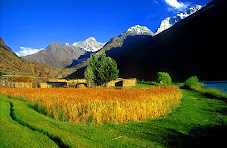
Kishmanja, a beautiful village in Yarkhun valley
Lush green
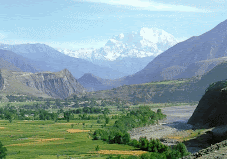
DIZG: threatened by floods
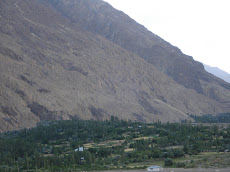
The legendary village of Ayun in Chitral
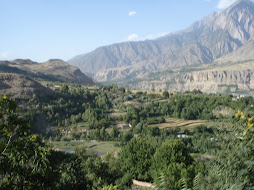
On way to Bumburet
Dizg, Yarkhun
About Me
- Zar Alam Khan Razakhel
- Village Dizg, Yarkhun valley, Chitral, Pakistan
- I blog at http://chitraltoday.net (ChitralToday) about Chitral, its people, culture, traditions and issues. I have been writing about Chitral since 2000. Chitral is a scenic valley in the extreme north-west of Pakistan.