Chitral State
Dated the 28th May 1941.
My dear friend,
During the period of war I did not like to confront the Government with any new request and so cause complication, but the report that a member of the ruling family of Nagar is being appointed the Governor of Yasen has caused such a consternation to the member of my own family and clan that I think it most urgent to bring it to your notice. About three hundred years ago the two brothers Mantaram Shah called Shah Katur the 1st and Khuahwaqt divided the Chitral State among themselves. Yasen since then became the seat of the descendants of Khushwaqt uninterruptedly till the year 1880, when my grand father Annual Mulk occupied all the three districts of Yasen Ghizr and Ishkoman and annexed them to Chitral ousting Mohiudding Pahalwan the ruler of Yasen. Till the year 1895 Yasen Ghizr and Ishkoman remained a part of Chitral. In 1895 these three districts were separated from Chitral state and the eldest son of the late ruler of Yasen, Abdurrahman Khan by name was appointed the ruler of Yasen, and Ghizr was also given to him. Ishkoman was given by my grand father to the exiled ruler of Wakhan, and remained in his hands till his death and was not annexed to the reconstituted principality of Yasen. As it was an act of clemency on the part of Government, it did not disturb our minds very much Later on Ghizr and Kuh were separated from Yasen and were made separate governorships under one Murad khan. As Murad Khan did not belong to any of the ruling houses of Gilgit Agency, his appointment was not very much resented being considered as a temporary measure. Now the crux of the whole question is that from Poonial to Chitral it is the heritage of one family and the members of this family are spread throughout the length and breadth of this country and many of them are in the service of the Government in different capacities. If a member of the ruling family of a state, who does not belong to our race is made Governor in any of these districts, then it shall be giving them a right which they never had in the history and depriving us all of our legitimate heritage.
As the beginning Government always looks to the rights and privileges of the people in all the corners of the Empire, so we have also a right to crave justice of the benign Government to our cause and not to dish out our heritage to outsiders while our own cousins who are the rightful rulers of the country are also aspirant to the kind favours of the Government. In the presence of a legitimate son of late Abdurrahaman Khan no one can claim Yasen by right. After the Khushwaqtas the second rightful clan is the Katur family of Chitral, both by right of conquest and by right of descent. The Burushas, a side branch of Khushwaqtas have always remained confined to Poonial, and before Abdurrahman Khan's time have never taken any interest in the affairs of Yasen buy they are also the possible claimant after the two aforesaid clans. But to bring a man from Nagar or Hunza shall be considered a great act of injustice for us all, because those people for the last three or four hundred years have never dared to come out of their valley and to interfere in the possessions of our family. I also attach herewith a position, which the members of my family have given me. A Genealogical tree of the Descent of Khushwaqtas is also attached.
Your most sincere friend.
Sd/-
Mehtar of Chitral
4. These instances show that weak old men cannot function properly as Governors in these District and therefore it seems only a wise precaution to ensure, by means of the proposal now under consideration, that in future no Governor shall remain in official harness beyond the age when it may reasonably be expected that his mental and physical powers will decline. Sixty is, I think, the latest age which can safely be adopted if this precaution is to be effective. 5. There remains the question of the Maharaja of Kashmir's concern with the proposed changes. As Suzeain of these Districts, His Highness should I think be consulted, and his approval to the new rules should be obtained before they are made public. I propose therefore to refer the proposals to the Kashmir Government as son as I hear that they have been accepted by the Government of India and to obtain His Highness' formal consent before authorising the Political Agent to announce the changes.
6. All this must take time, but the earlier the retirement of Raja Mir Baz Khan and His succession by Khan Saheb Mahbub Ali Khan Takes place the better, and so I would request that the Government of India's approval of these proposals may kindly be conveyed to me as early as possible. I have etc.,
Sd/- D.M. Fraser,
Resident in Kashmir
Tuesday, July 29, 2008

Monday, July 28, 2008
Govt asked to import power thru Chitral route
By Zar Alam Khan
ISLAMABAD: Elected representatives of Chitral have called upon the government to go for the shortest and most viable Wakhan-Chitral route for the proposed import of 1,000 megawatts electricity from Central Asia.
Talking to this correspondent, MNA Shahzada Mohiuddin, MPA Ghulam Mohammad and tehsil nazim Mastuj Shahzada Sikendarul Mulk pointed out that for the NWFP such an initiative also translates into opening up of a much-needed second trade corridor along the Khyber Pass, as the proposed route was not only geographically closer to Tajikistan and Kryghistan, but was also very secure since it had remained peaceful throughout the three decades of war and strife in Afghanistan.
The World Bank estimates the project cost at around $600 million. Given NWFP's close proximity to Tajikistan by a mere 35 miles, that is the distance separating Chitral from the Central Asian country, it becomes the natural choice for laying the high voltage transmission line via Boroghil Pass, the very junction separating the Amu Darya (Oxus River) from River Chitral (better known as Kabul River in NWFP).
They said on the Chitral side, a jeep track already exists up to Chikar (Petch Utz) at a distance of only 11 miles from Boroghil right across which a truck-able road exists on the Afghan side of Darwaza. The Tajik border town of Langar is a mere 13 miles away from Darwaza while the distance from Chitral's border to Khorog, the provincial capital of GABO (Gorno Badakshan Autonomous Oblasc), is just 137 miles - all having a truck-able road.
Moreover, Chitral is already linked with the national power grid and in contrast to the 1,300 kilometers to be covered if the Northern Areas route is taken the transmission line via Chitral will only be 700 kilometers to reach Peshawar.
They said the two other proposed routes were exorbitantly costly besides being danger prone. The first to pass via Kabul and connect to Quetta will have to cover 2,500 kilometers of treacherous insurgency-prone Taliban territory. Policy makers will have to think twice about the Kabul route, as Nato and Afghan forces have been unable even to ensure continuous gas supply from Balochistan. The second proposed route via the Ishkuman valley of the Northern Areas covering 70 per cent hard rock passes through three major glaciers and three mountain ranges - Karakoram, Hindukush and Himalayas - before covering around 1,300 kilometers to reach Pakistan's nearest national grid. It makes it a very costly and unfeasible proposition. The Northern Areas currently has no link with the national grid and work on the Basha-Diamer Dam will take at least 10-15 years. In contrast, if the transmission line were to follow the natural plateau of the Boroghil route into Chitral, it encounters no glaciers and follows the river bank with no mountain passes at all. Interestingly, studies by the German GTZ put Chitral's power generation capacity at 6,000-8,000 megawatts making it a potential source of cash to propel the national economy. Indigenous electricity generated from River Chitral, the NWFP's largest river, can be added to the same Central Asian transmission line thereby making it a dual purpose system besides making it a cost-effective proposition.
Without electricity, the province’s industrialisation through the creation of US-sponsored Reconstruction Opportunity Zones will remain a pipe dream and so will be the desire to wean people away from militancy into gainful employment. Americans who are encouraging this $600 million project to resolve the power crisis of Pakistan should also be keen to boost the NWFP economy by seeing that the landlocked province is linked to Central Asia. Upon completion, this route will also supplement the province’s income side-by-side the Khyber Pass as both the northern and southern portals of the Lowari Tunnel meet around November this year.--chitraltoday.com
ISLAMABAD: Elected representatives of Chitral have called upon the government to go for the shortest and most viable Wakhan-Chitral route for the proposed import of 1,000 megawatts electricity from Central Asia.
Talking to this correspondent, MNA Shahzada Mohiuddin, MPA Ghulam Mohammad and tehsil nazim Mastuj Shahzada Sikendarul Mulk pointed out that for the NWFP such an initiative also translates into opening up of a much-needed second trade corridor along the Khyber Pass, as the proposed route was not only geographically closer to Tajikistan and Kryghistan, but was also very secure since it had remained peaceful throughout the three decades of war and strife in Afghanistan.
The World Bank estimates the project cost at around $600 million. Given NWFP's close proximity to Tajikistan by a mere 35 miles, that is the distance separating Chitral from the Central Asian country, it becomes the natural choice for laying the high voltage transmission line via Boroghil Pass, the very junction separating the Amu Darya (Oxus River) from River Chitral (better known as Kabul River in NWFP).
They said on the Chitral side, a jeep track already exists up to Chikar (Petch Utz) at a distance of only 11 miles from Boroghil right across which a truck-able road exists on the Afghan side of Darwaza. The Tajik border town of Langar is a mere 13 miles away from Darwaza while the distance from Chitral's border to Khorog, the provincial capital of GABO (Gorno Badakshan Autonomous Oblasc), is just 137 miles - all having a truck-able road.
Moreover, Chitral is already linked with the national power grid and in contrast to the 1,300 kilometers to be covered if the Northern Areas route is taken the transmission line via Chitral will only be 700 kilometers to reach Peshawar.
They said the two other proposed routes were exorbitantly costly besides being danger prone. The first to pass via Kabul and connect to Quetta will have to cover 2,500 kilometers of treacherous insurgency-prone Taliban territory. Policy makers will have to think twice about the Kabul route, as Nato and Afghan forces have been unable even to ensure continuous gas supply from Balochistan. The second proposed route via the Ishkuman valley of the Northern Areas covering 70 per cent hard rock passes through three major glaciers and three mountain ranges - Karakoram, Hindukush and Himalayas - before covering around 1,300 kilometers to reach Pakistan's nearest national grid. It makes it a very costly and unfeasible proposition. The Northern Areas currently has no link with the national grid and work on the Basha-Diamer Dam will take at least 10-15 years. In contrast, if the transmission line were to follow the natural plateau of the Boroghil route into Chitral, it encounters no glaciers and follows the river bank with no mountain passes at all. Interestingly, studies by the German GTZ put Chitral's power generation capacity at 6,000-8,000 megawatts making it a potential source of cash to propel the national economy. Indigenous electricity generated from River Chitral, the NWFP's largest river, can be added to the same Central Asian transmission line thereby making it a dual purpose system besides making it a cost-effective proposition.
Without electricity, the province’s industrialisation through the creation of US-sponsored Reconstruction Opportunity Zones will remain a pipe dream and so will be the desire to wean people away from militancy into gainful employment. Americans who are encouraging this $600 million project to resolve the power crisis of Pakistan should also be keen to boost the NWFP economy by seeing that the landlocked province is linked to Central Asia. Upon completion, this route will also supplement the province’s income side-by-side the Khyber Pass as both the northern and southern portals of the Lowari Tunnel meet around November this year.--chitraltoday.com
Wednesday, June 18, 2008
Predicted floods could exacerbate food security
ISLAMABAD: Nadir Shah, 35, from the Chitral mountain valley in northern Pakistan, about 390km northwest of Islamabad, is uncertain what to do.
Fingering the battered pay-phone card he keeps in his wallet - enabling him to call his family about once a week - Shah, who works as a domestic help, explains: "I have heard there have been flash floods. A bridge was washed away. I am wondering if I need to go back and make sure my family is safe."
According to reports, Sore Rech village, some 160km north of Chitral, the valley's main town, was cut off from the rest of the district for three days in mid-June as a suspension bridge over the River Torkhow was washed away by floods.
Nadir's family was not among those affected, but he fears further flash floods, common in mountain areas when hill torrents are triggered by heavy rain.
More severe monsoon?
Weather forecasts have been warning of a more severe monsoon this year. Uncharacteristically for mid-June, rain has already begun to fall in northern parts of the country.
"The monsoon rains this year are likely to be 25-30 percent heavier than normal in northern areas," Hazrat Mir, chief meteorologist at the Met Office in Lahore, told IRIN. He warned that major rivers could flood and that there could be flash floods in smaller waterways, which often cause the worst damage.
The monsoon rains normally cause transport problems, with water-logged roads and unstable bridges. This is especially true in northern areas, where communities are dependent on supplies sent in by truck.
Monsoon rains normally cause transport problems, with water-logged roads and unstable bridges
Food
Swelling rivers mean narrow, but vital, suspension bridges can become unsafe, and the early monsoon this year has reduced the time in which to stock up on food.
"The monsoon creates problems in bringing up essentials like 'atta' [flour] to areas such as Chitral. When there are shortages, prices soar. Everything is already more expensive than last year and I fear food prices may rise further," said Nadir Shah.
Food price inflation has been running at 15-20 percent over the past year in northern Pakistan.
"If this continues, we are in for a very tough time," says Aslam Baba, about 75, who has lived his entire life in Shahdra, a suburb on the outskirts of Lahore, capital of the Punjab. The poor locality, where many houses are made from unbaked bricks and are thus vulnerable to damage by rain or storms, lies alongside the River Ravi. Flooding is a regular feature during the monsoon which most often arrives in mid-July, with families frequently displaced and homes damaged.
"Last year was not that bad, but I can remember years when cattle were washed away and houses came tumbling down," said Aslam.
In Balochistan, the situation of cyclone survivors is grim, with many still living in temporary shelters and drinking contaminated water
Flood warnings
Things have now improved somewhat. There are better flood warning and disease prevention systems in place. "We have an elaborate system of radars and sensors to collect weather data," the Met Office’s Mir said. However, disaster control systems, which depend on government action, on the whole, remain inadequate.
There was an example of this in Thatta District, Sindh Province, about 100km east of Karachi, last week. Tidal waves, apparently triggered by monsoon weather, inundated 40 coastal villages. Local people complain no early warnings were given and they had no time to secure belongings or take other action.
Cyclone aftermath
People who live along the Sindh coastal belt have good reason to be concerned. In June 2007 Thatta was among the areas hit by Cyclone Yemyin, which affected 2.5 million people and left 350,000 displaced.
Many of the victims are still struggling to rebuild their lives. "I lost my fishing boat at sea and my home was damaged. I have struggled to rebuild it but have received very little help," said Ghulam Din, 30, from a village near Thatta.
In Balochistan, the situation of cyclone survivors is grimmer. In areas such as Jhal Magsi, 170km southwest of the provincial capital, Quetta, about 140,000 were displaced after the cyclone. Although no official estimates are available, Farid Khan, provincial coordinator for the Human Rights Commission of Pakistan, said: "Thousands still do not have proper houses while water supplies have also been contaminated by the flooding that followed the cyclone." --IRIN
Fingering the battered pay-phone card he keeps in his wallet - enabling him to call his family about once a week - Shah, who works as a domestic help, explains: "I have heard there have been flash floods. A bridge was washed away. I am wondering if I need to go back and make sure my family is safe."
According to reports, Sore Rech village, some 160km north of Chitral, the valley's main town, was cut off from the rest of the district for three days in mid-June as a suspension bridge over the River Torkhow was washed away by floods.
Nadir's family was not among those affected, but he fears further flash floods, common in mountain areas when hill torrents are triggered by heavy rain.
More severe monsoon?
Weather forecasts have been warning of a more severe monsoon this year. Uncharacteristically for mid-June, rain has already begun to fall in northern parts of the country.
"The monsoon rains this year are likely to be 25-30 percent heavier than normal in northern areas," Hazrat Mir, chief meteorologist at the Met Office in Lahore, told IRIN. He warned that major rivers could flood and that there could be flash floods in smaller waterways, which often cause the worst damage.
The monsoon rains normally cause transport problems, with water-logged roads and unstable bridges. This is especially true in northern areas, where communities are dependent on supplies sent in by truck.
Monsoon rains normally cause transport problems, with water-logged roads and unstable bridges
Food
Swelling rivers mean narrow, but vital, suspension bridges can become unsafe, and the early monsoon this year has reduced the time in which to stock up on food.
"The monsoon creates problems in bringing up essentials like 'atta' [flour] to areas such as Chitral. When there are shortages, prices soar. Everything is already more expensive than last year and I fear food prices may rise further," said Nadir Shah.
Food price inflation has been running at 15-20 percent over the past year in northern Pakistan.
"If this continues, we are in for a very tough time," says Aslam Baba, about 75, who has lived his entire life in Shahdra, a suburb on the outskirts of Lahore, capital of the Punjab. The poor locality, where many houses are made from unbaked bricks and are thus vulnerable to damage by rain or storms, lies alongside the River Ravi. Flooding is a regular feature during the monsoon which most often arrives in mid-July, with families frequently displaced and homes damaged.
"Last year was not that bad, but I can remember years when cattle were washed away and houses came tumbling down," said Aslam.
In Balochistan, the situation of cyclone survivors is grim, with many still living in temporary shelters and drinking contaminated water
Flood warnings
Things have now improved somewhat. There are better flood warning and disease prevention systems in place. "We have an elaborate system of radars and sensors to collect weather data," the Met Office’s Mir said. However, disaster control systems, which depend on government action, on the whole, remain inadequate.
There was an example of this in Thatta District, Sindh Province, about 100km east of Karachi, last week. Tidal waves, apparently triggered by monsoon weather, inundated 40 coastal villages. Local people complain no early warnings were given and they had no time to secure belongings or take other action.
Cyclone aftermath
People who live along the Sindh coastal belt have good reason to be concerned. In June 2007 Thatta was among the areas hit by Cyclone Yemyin, which affected 2.5 million people and left 350,000 displaced.
Many of the victims are still struggling to rebuild their lives. "I lost my fishing boat at sea and my home was damaged. I have struggled to rebuild it but have received very little help," said Ghulam Din, 30, from a village near Thatta.
In Balochistan, the situation of cyclone survivors is grimmer. In areas such as Jhal Magsi, 170km southwest of the provincial capital, Quetta, about 140,000 were displaced after the cyclone. Although no official estimates are available, Farid Khan, provincial coordinator for the Human Rights Commission of Pakistan, said: "Thousands still do not have proper houses while water supplies have also been contaminated by the flooding that followed the cyclone." --IRIN
Monday, June 16, 2008
Name NAs as Gilgit-Baltistan
SKARDU: Speakers at a public rally here demanded restoration
of the region's historical name, Gilgit-Baltistan, instead
of calling it `Northern Areas'.
They also sought formation of an independent constituent
assembly to draft a constitution for the region in accordance
with the aspirations of the people.
The speakers asked the world community to take notice of what
they called human rights violations in Gilgit-Baltistan.
The public meeting was organised by the Gilgit-Baltistan
United Movement at Yadgar-i-Shuhada Chowk.
The representatives of the component parties of the Gilgit-
Baltistan Democratic Alliance (GBDA) appealed to the United
Nations, European Union as well as the world community to
focus their attention on Gilgit-Baltistan to help the
people in achieving their basic human rights.
The region's historical name, Gilgit Baltistan, should be
restored and the so-called `Northern Areas' should be done
away with, the speakers demanded.
All the routes especially the historical route between
Kargil and Skardu should be opened so that the divided families
can meet each other.
All land given to non-local people in Gilgit-Baltistan in
violation of the State Subject Rule should be retrieved and
the SSR should be enforced in the area, they added.
The speakers said as per suggestion of President Pervez
Musharraf, India should withdraw its forces from Kargil and
Laddakh and at the same time Pakistan should pull out of
Gilgit-Baltistan.
They demanded withdrawal of all non-local military and
civilian officials posted in civilian organisations of
Gilgit-Baltistan and appointment of locals in their place.
They warned the officials of sensitive agencies against
meddling in public affairs and harassment of political
workers and violation of human rights.
They also demanded handing over of the control of Special
Communication Organisation (SCO) and Frontier Work Organisation
(FWO) to local civilians and induction of local youth in
these organisations.
The meeting called for withdrawal of `fake' cases against
political workers and leaders of Gilgit-Baltistan, lifting of
the ban on monthly Kargil International magazine and ensuring
freedom of expression and security to the local journalists.
Through another resolution, they demanded setting up of
engineering, medical and IT universities in Skardu, Chilas,
Hunza and Gahkuch.
They also asked the government to stop projects like
Diamer-Basha dam, Bunji dam and Satpara dam in Skardu,
and reinstatement of workers sacked by a private company
in Sadpara dam.
of the region's historical name, Gilgit-Baltistan, instead
of calling it `Northern Areas'.
They also sought formation of an independent constituent
assembly to draft a constitution for the region in accordance
with the aspirations of the people.
The speakers asked the world community to take notice of what
they called human rights violations in Gilgit-Baltistan.
The public meeting was organised by the Gilgit-Baltistan
United Movement at Yadgar-i-Shuhada Chowk.
The representatives of the component parties of the Gilgit-
Baltistan Democratic Alliance (GBDA) appealed to the United
Nations, European Union as well as the world community to
focus their attention on Gilgit-Baltistan to help the
people in achieving their basic human rights.
The region's historical name, Gilgit Baltistan, should be
restored and the so-called `Northern Areas' should be done
away with, the speakers demanded.
All the routes especially the historical route between
Kargil and Skardu should be opened so that the divided families
can meet each other.
All land given to non-local people in Gilgit-Baltistan in
violation of the State Subject Rule should be retrieved and
the SSR should be enforced in the area, they added.
The speakers said as per suggestion of President Pervez
Musharraf, India should withdraw its forces from Kargil and
Laddakh and at the same time Pakistan should pull out of
Gilgit-Baltistan.
They demanded withdrawal of all non-local military and
civilian officials posted in civilian organisations of
Gilgit-Baltistan and appointment of locals in their place.
They warned the officials of sensitive agencies against
meddling in public affairs and harassment of political
workers and violation of human rights.
They also demanded handing over of the control of Special
Communication Organisation (SCO) and Frontier Work Organisation
(FWO) to local civilians and induction of local youth in
these organisations.
The meeting called for withdrawal of `fake' cases against
political workers and leaders of Gilgit-Baltistan, lifting of
the ban on monthly Kargil International magazine and ensuring
freedom of expression and security to the local journalists.
Through another resolution, they demanded setting up of
engineering, medical and IT universities in Skardu, Chilas,
Hunza and Gahkuch.
They also asked the government to stop projects like
Diamer-Basha dam, Bunji dam and Satpara dam in Skardu,
and reinstatement of workers sacked by a private company
in Sadpara dam.
Islamabad-Chitral flights in limbo
Chitratoday.com
THE Pakistan International Airlines (PIA) Rawalpindi on Monday
cancelled its scheduled resumption of flights to Chitral citing
operation problems and asked the intending passengers to
contact its Peshawar office for tickets.
Those waiting the relaunch of the flights for the last many days
criticised the PIA for failing to fulfil its promise at the eleventh
hour.
IT seems that the PIA administration has taken its Islamabad-
Chitral flights for granted, as even most of the officials at the
national flag carrier's office in Rawalpindi were not aware of the
flight resumption in the first place.
On Saturday, the officials at the PIA office had issued unconfirmed
tickets for Chitral for Monday and asked the passengers to get
them confirmed on Sunday. But on Sunday they said as the
flight from Peshawar could not be operated, therefore flights
from Islamabad would be relaunched from Tuesday. When the
ticket seekers again went to the office on Monday morning, they
were asked either to get their money refunded or proceed to
Peshawar as PIA was unable to start the flights from Islamabad
due to operational problems.
The frustrated passengers including women and children criticised
the management of the PIA and called upon their elected
representatives to take up the issue in parliament and other forums
and direct the PIA to stop playing joke with the people of Chitral.
THE Pakistan International Airlines (PIA) Rawalpindi on Monday
cancelled its scheduled resumption of flights to Chitral citing
operation problems and asked the intending passengers to
contact its Peshawar office for tickets.
Those waiting the relaunch of the flights for the last many days
criticised the PIA for failing to fulfil its promise at the eleventh
hour.
IT seems that the PIA administration has taken its Islamabad-
Chitral flights for granted, as even most of the officials at the
national flag carrier's office in Rawalpindi were not aware of the
flight resumption in the first place.
On Saturday, the officials at the PIA office had issued unconfirmed
tickets for Chitral for Monday and asked the passengers to get
them confirmed on Sunday. But on Sunday they said as the
flight from Peshawar could not be operated, therefore flights
from Islamabad would be relaunched from Tuesday. When the
ticket seekers again went to the office on Monday morning, they
were asked either to get their money refunded or proceed to
Peshawar as PIA was unable to start the flights from Islamabad
due to operational problems.
The frustrated passengers including women and children criticised
the management of the PIA and called upon their elected
representatives to take up the issue in parliament and other forums
and direct the PIA to stop playing joke with the people of Chitral.
Sunday, June 15, 2008
Sufism can bring peace to tribal areas
PESHAWAR: NWFP Senior Minister Bashir Bilour Saturday said sincere efforts of the Sufi saints spread Islam in the sub-continent hence they could play a pivotal role in bringing normalcy to the militancy-hit Pakhtun region.
“How regrettable is this that suicide bombings and beheadings are being carried out in the name of Islam,” he said.
Bilour was addressing the launching ceremony of the biography of Pir Sahib Timberpura Shareef, Syed Mustan Shah also known as ‘Haq Baba, authored by a renowned journalist Salahuddin Ahmad. He said some hidden forces were trying to weaken Pakhtuns by misinterpreting religion and deceiving the simple people.
Bilour added that dictators were responsible for plunging the country into crises, saying that a military adventurer turned Afghan war into holy ‘jihad’ although it was a proxy war of the US-led capitalist bloc.
“The law & order situation has deteriorated to the extent that we feel ourselves insecure even sitting here in the press club,” he said. “By preaching the message of love and peace, which the Sufis used to win the hearts of the non-Muslim Indians, can control this menace,” he added.
On the occasion, prominent Shia scholar Allama Fakhrul Hasan Kararvi said Islam teaches mutual respect to the extent that it extend due deference not only to all sacred religions but it pays reverence to the whole humanity. Paying tribute to Syed Mustan Shah, lovingly called Haq Baba, he said that he never talked about any sect but always emphasised on the respect of humanity.
Another religious scholar Prof Dr Abdul Ghafoor said that Sufi purifies the inner self and the person having achieved this target would never harm his Muslim brethren.
“How regrettable is this that suicide bombings and beheadings are being carried out in the name of Islam,” he said.
Bilour was addressing the launching ceremony of the biography of Pir Sahib Timberpura Shareef, Syed Mustan Shah also known as ‘Haq Baba, authored by a renowned journalist Salahuddin Ahmad. He said some hidden forces were trying to weaken Pakhtuns by misinterpreting religion and deceiving the simple people.
Bilour added that dictators were responsible for plunging the country into crises, saying that a military adventurer turned Afghan war into holy ‘jihad’ although it was a proxy war of the US-led capitalist bloc.
“The law & order situation has deteriorated to the extent that we feel ourselves insecure even sitting here in the press club,” he said. “By preaching the message of love and peace, which the Sufis used to win the hearts of the non-Muslim Indians, can control this menace,” he added.
On the occasion, prominent Shia scholar Allama Fakhrul Hasan Kararvi said Islam teaches mutual respect to the extent that it extend due deference not only to all sacred religions but it pays reverence to the whole humanity. Paying tribute to Syed Mustan Shah, lovingly called Haq Baba, he said that he never talked about any sect but always emphasised on the respect of humanity.
Another religious scholar Prof Dr Abdul Ghafoor said that Sufi purifies the inner self and the person having achieved this target would never harm his Muslim brethren.
Speaker, PM to visit Chitral
ISLAMABAD: Speaker National Assembly Fehmida Mirza on Sunday accepted an invitation from MNA Shahzada Mohiuddin to visit Chitral.
During budget debate in the National Assembly, the MNA requested her to visit his constituency to know about the problems of the people there. He offered to arrange for a helicopter for the purpose.
When Shahzada finished his speech, Fehmida Mirza said she will visit Chitral along with the prime minister who was also present in the house and gave a nod in the affirmative.
During budget debate in the National Assembly, the MNA requested her to visit his constituency to know about the problems of the people there. He offered to arrange for a helicopter for the purpose.
When Shahzada finished his speech, Fehmida Mirza said she will visit Chitral along with the prime minister who was also present in the house and gave a nod in the affirmative.
Subscribe to:
Posts (Atom)
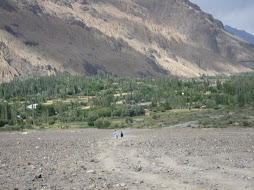
Awesome and rugged

Beauty of Chitral
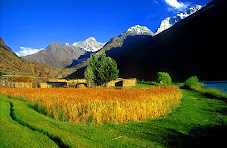
Kishmanja, a beautiful village in Yarkhun valley
Lush green
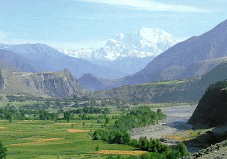
DIZG: threatened by floods
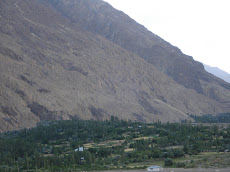
The legendary village of Ayun in Chitral
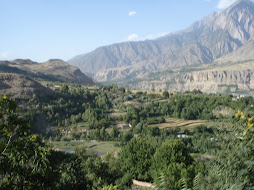
On way to Bumburet
Dizg, Yarkhun
About Me

- Zar Alam Khan Razakhel
- Village Dizg, Yarkhun valley, Chitral, Pakistan
- I blog at http://chitraltoday.net (ChitralToday) about Chitral, its people, culture, traditions and issues. I have been writing about Chitral since 2000. Chitral is a scenic valley in the extreme north-west of Pakistan.