In a meeting held here on Tuesday with Chitral DCO Mutasim Billah Shah in the chair, recommended steps to make the upcoming polio campaign successful by administering vaccine to 75,682 children in the district.
The health department officials told the meeting that 231 mobile teams had been constituted to cover the whole district while transit centers would be established at the city airport and two border areas of Ashrait and Shandur. The campaign will commence from October 13 and continue for three days.
The Chitral DCO emphasised the need of reaching maximum number of people to make them realise the importance of the national immunisation days to ensure their active participation. He assured all-out support from the district government to make the campaign a success.
Tuesday, October 7, 2008

Trade corridor: paradigm shift we’ve been waiting for?
An official of the World Bank in Islamabad says the Bank is ready to lend Pakistan $2.25 billion for a trade and energy corridor focusing mostly on Gwadar Port and its land link with China: “the trade and energy corridor that would serve as a gateway for commerce and transport between South Asia, Central Asia, China and the Gulf countries”. In this proposed scheme of things, Pakistan will set up a big oil terminal and refineries at Gwadar with Chinese help because most of the oil will be transported to China from there.
But the World Bank official has made other observations too: “Any land-based trade between the Gulf region and the South Asian states can best take place through Pakistan. The country would work as a link between the Gulf region, Iran, Afghanistan, China and Central Asia and that would make regional states natural trading partners. Pakistan is the ideal approach for the shipment of Indian goods to Afghanistan and the Central Asian markets”. Hopefully we can add the Iran-Pakistan-India (IPI) pipeline to the above project(s) after the complex tripartite negotiations on it are successfully concluded.
But a much more important thing happened during President Asif Ali Zardari’s meeting with the Indian prime minister, Dr Manmohan Singh, in New York. The report says: “The two met on sidelines of the 63rd United Nations General Assembly session and announced a mutual agreement on a number of vital business-related issues. On top of everything else came Pakistan’s agreement to allow Indians an overland access to Afghanistan.”
The trade corridor was first spoken of by General Musharraf in one of his enlightened moments. He was thinking in paradigmatic terms, about converting Pakistan into a trading hub for the regions lying around it. Since he had begun to build the Gwadar Port — not first conceived by him, let us admit — the network of roads and railway tracks branching from the port seemed to leave India out. But later he began to speak in more general terms and was once privately in favour of conceding the Indian request that a corridor be given it for trading with Central Asia.
But the idea of the Indian corridor got stuck because Gen Musharraf deferred to the “defence” angle and abstained from delinking it from Kashmir, despite having established the precedent of delinking the IPI from Kashmir. As a general, he probably realised that he might be standing on the edge of an identity-change of the state of Pakistan. But equally as a general, perhaps he realised the limits of how far he could go in changing the country from a warrior state to a trading nation.
There are two ways of looking at “geopolitical importance”, or two ways of deriving benefit from it. One is the “civilian” approach which means the geographically important state has to develop its roadways and railways, and other infrastructure such as hotels, to facilitate those who wish to pass through. Once the geographically “connective” state has become an effective corridor of passage, its “strategic” importance no doubt increases. And the dividend of this importance comes in economic terms and through an absence of war.
The other way is the “military” approach which relies on geography as “hindrance” rather than “connection”. The military mind says: we are in the middle and we will not let you pass unless you agree to our terms. (To India, we say let’s resolve Kashmir before we talk free trade.) In Pakistan’s case, this approach is often cited also as a raison d’etre for being a military dominated national security state. This is a warrior’s approach and signalises his preference for selective militarism as opposed to generalised economic betterment. In the case of Pakistan, it is the military view of geopolitical importance that has held sway.
Pakistan as a nuclear power is eminently suited to becoming a trade corridor with capacity to lay down the terms compatible with its economic interest. The Central Asian market may be small at this moment and it may be tough for India to compete with China there, but in the coming years the region of SAARC will take what is its due in Central Asia on the basis of shared history and civilisation. Afghanistan has already decided where it wants to stand by joining SAARC. The free trade project of the SAARC “common market” will finally integrate it to South Asia. The Central Asians will follow.
The smuggling that takes place between Pakistan and Afghanistan now supplies markets in Central Asia. The flour Pakistan loses to the region northwest of it will no longer be smuggled because the support price of wheat is now linked to the international price. The next stage is Pakistan organising the Central Asian food supply on the strength of its trade corridor and making the middleman’s money out of it.--Daily Times
But the World Bank official has made other observations too: “Any land-based trade between the Gulf region and the South Asian states can best take place through Pakistan. The country would work as a link between the Gulf region, Iran, Afghanistan, China and Central Asia and that would make regional states natural trading partners. Pakistan is the ideal approach for the shipment of Indian goods to Afghanistan and the Central Asian markets”. Hopefully we can add the Iran-Pakistan-India (IPI) pipeline to the above project(s) after the complex tripartite negotiations on it are successfully concluded.
But a much more important thing happened during President Asif Ali Zardari’s meeting with the Indian prime minister, Dr Manmohan Singh, in New York. The report says: “The two met on sidelines of the 63rd United Nations General Assembly session and announced a mutual agreement on a number of vital business-related issues. On top of everything else came Pakistan’s agreement to allow Indians an overland access to Afghanistan.”
The trade corridor was first spoken of by General Musharraf in one of his enlightened moments. He was thinking in paradigmatic terms, about converting Pakistan into a trading hub for the regions lying around it. Since he had begun to build the Gwadar Port — not first conceived by him, let us admit — the network of roads and railway tracks branching from the port seemed to leave India out. But later he began to speak in more general terms and was once privately in favour of conceding the Indian request that a corridor be given it for trading with Central Asia.
But the idea of the Indian corridor got stuck because Gen Musharraf deferred to the “defence” angle and abstained from delinking it from Kashmir, despite having established the precedent of delinking the IPI from Kashmir. As a general, he probably realised that he might be standing on the edge of an identity-change of the state of Pakistan. But equally as a general, perhaps he realised the limits of how far he could go in changing the country from a warrior state to a trading nation.
There are two ways of looking at “geopolitical importance”, or two ways of deriving benefit from it. One is the “civilian” approach which means the geographically important state has to develop its roadways and railways, and other infrastructure such as hotels, to facilitate those who wish to pass through. Once the geographically “connective” state has become an effective corridor of passage, its “strategic” importance no doubt increases. And the dividend of this importance comes in economic terms and through an absence of war.
The other way is the “military” approach which relies on geography as “hindrance” rather than “connection”. The military mind says: we are in the middle and we will not let you pass unless you agree to our terms. (To India, we say let’s resolve Kashmir before we talk free trade.) In Pakistan’s case, this approach is often cited also as a raison d’etre for being a military dominated national security state. This is a warrior’s approach and signalises his preference for selective militarism as opposed to generalised economic betterment. In the case of Pakistan, it is the military view of geopolitical importance that has held sway.
Pakistan as a nuclear power is eminently suited to becoming a trade corridor with capacity to lay down the terms compatible with its economic interest. The Central Asian market may be small at this moment and it may be tough for India to compete with China there, but in the coming years the region of SAARC will take what is its due in Central Asia on the basis of shared history and civilisation. Afghanistan has already decided where it wants to stand by joining SAARC. The free trade project of the SAARC “common market” will finally integrate it to South Asia. The Central Asians will follow.
The smuggling that takes place between Pakistan and Afghanistan now supplies markets in Central Asia. The flour Pakistan loses to the region northwest of it will no longer be smuggled because the support price of wheat is now linked to the international price. The next stage is Pakistan organising the Central Asian food supply on the strength of its trade corridor and making the middleman’s money out of it.--Daily Times
Monday, October 6, 2008
Lowari tunnel will be opened this winter
By Zahiruddin
CHITRAL: The first phase of the Lowari tunnel project will be completed in the first week of December, which is likely to be opened for traffic after closure of the Lowari Pass in winter.
Talking to journalists at an Eid Milan party here on Monday, District Nazim Maghfirat Shah said completion of the project’s phase-I would be an historical day for Chitral, which would be celebrated as ‘thanksgiving day’.
He said the day would be declared a public holiday in the district and programmes would be arranged in Drosh, Chitral city and Booni. He said preparations had been started by the district government to celebrate the day in a befitting manner.
The nazim said the second phase of the project would commence soon. He said that in the previous years, the people of Chitral used to travel through the Kunar province of Afghanistan and the Mohmand Agency in winter due to closure of the Lowari Pass, but it would not be possible now due to the volatile situation both in Afghanistan and the tribal areas of Pakistan.
He said the National Highway Authority high-ups had agreed to facilitate passengers through the under-construction tunnel after completion of its first phase. He said NHA buses would offer shuttle service to transport passengers through the tunnel, which would be available twice a day.
CHITRAL: The first phase of the Lowari tunnel project will be completed in the first week of December, which is likely to be opened for traffic after closure of the Lowari Pass in winter.
Talking to journalists at an Eid Milan party here on Monday, District Nazim Maghfirat Shah said completion of the project’s phase-I would be an historical day for Chitral, which would be celebrated as ‘thanksgiving day’.
He said the day would be declared a public holiday in the district and programmes would be arranged in Drosh, Chitral city and Booni. He said preparations had been started by the district government to celebrate the day in a befitting manner.
The nazim said the second phase of the project would commence soon. He said that in the previous years, the people of Chitral used to travel through the Kunar province of Afghanistan and the Mohmand Agency in winter due to closure of the Lowari Pass, but it would not be possible now due to the volatile situation both in Afghanistan and the tribal areas of Pakistan.
He said the National Highway Authority high-ups had agreed to facilitate passengers through the under-construction tunnel after completion of its first phase. He said NHA buses would offer shuttle service to transport passengers through the tunnel, which would be available twice a day.
Woman commits suicide in awi
CHITRAL: A newly-married woman, Ms Jamal, committed suicide by jumping
into the Chitral River in the Awi village of the Mastuj
tehsil, police sources said.
The reason behind the suicide could not be ascertained. The
woman’s husband is said to be in Karachi in connection
with his job. The body was retrieved from the river and
later buried.
into the Chitral River in the Awi village of the Mastuj
tehsil, police sources said.
The reason behind the suicide could not be ascertained. The
woman’s husband is said to be in Karachi in connection
with his job. The body was retrieved from the river and
later buried.
Islamabad-Chitral flights still being mismanaged
CHITRAL: Islamabad-Chitral flight though still operating is being handled in a very callous manner by the PIA staff at Rawalpindi/Islamabad ticketing offices.
One of the recent passengers on this flight said he went to the Rawalpindi ticketing office Northern areas counter at 1600 hrs to get a ticket to Chitral for the next day. The staff there said the office working has closed at 1500 hrs and he should buy the ticket at the airport in the morning or contact the domestic counter in the main hall. When the passenger showed him the timings written on the door ie from 0900to 1700 hrs the staff did not not have any explanation.
At the domestic counter the lady at the desk promptly responded by saying no confirmed ticket could be given for Chitral flight (despite the fact that the flight was empty) and when the passenger asked for an open ticket the lady asked his supervisor who after examining the passenger from head to toe told the lady "isko dey doe" (give it to him).
When the passenger told the supervisor why were they being unfaithful to the PIA by trying to inflict losses on it and frustrating the passengers, the supervisor started beating about the bush trying to blame the weather etc and said if in future he needed ticket he should come to him directly, etc.
It may be mentioned here that the Islamabad-Chitral flight has not been advertised at all on any Tv channel or news paper, and the fare has been kept at Rs 3600/- against Rs 2900/- of Gilgit despite the fact that Gilgit is at a longer distance which means more flying time than Chitral, and both areas are tax free. It is time our public representatives wake up and fulfill their responsibilities. They should promptly raise this issue in both the National and Provincial Assembliy, before the PIA closes down this flight again.--Courtesy Chitral News
One of the recent passengers on this flight said he went to the Rawalpindi ticketing office Northern areas counter at 1600 hrs to get a ticket to Chitral for the next day. The staff there said the office working has closed at 1500 hrs and he should buy the ticket at the airport in the morning or contact the domestic counter in the main hall. When the passenger showed him the timings written on the door ie from 0900to 1700 hrs the staff did not not have any explanation.
At the domestic counter the lady at the desk promptly responded by saying no confirmed ticket could be given for Chitral flight (despite the fact that the flight was empty) and when the passenger asked for an open ticket the lady asked his supervisor who after examining the passenger from head to toe told the lady "isko dey doe" (give it to him).
When the passenger told the supervisor why were they being unfaithful to the PIA by trying to inflict losses on it and frustrating the passengers, the supervisor started beating about the bush trying to blame the weather etc and said if in future he needed ticket he should come to him directly, etc.
It may be mentioned here that the Islamabad-Chitral flight has not been advertised at all on any Tv channel or news paper, and the fare has been kept at Rs 3600/- against Rs 2900/- of Gilgit despite the fact that Gilgit is at a longer distance which means more flying time than Chitral, and both areas are tax free. It is time our public representatives wake up and fulfill their responsibilities. They should promptly raise this issue in both the National and Provincial Assembliy, before the PIA closes down this flight again.--Courtesy Chitral News
Saturday, October 4, 2008
JI leader sees conspiracy to establish Ismaili state
Jamaat-i-Islami NWFP chief Sirajul Haq has said international conspiracies are being hatched to establish an ‘Ismaili state’ in the northern parts of Pakistan.
Speaking at an Eid Milan party at a Timergarah village, he said the Ismaili state was to comprise Gilgit, Chitral, Bajaur and Dir. He, however, said his party was there to foil the designs of the international conspirators.
Siraj said due increasing lawlessness and militancy, even members of parliament and rulers were not ready to live among their voters and fleeing from their respective constituencies.
Speaking at an Eid Milan party at a Timergarah village, he said the Ismaili state was to comprise Gilgit, Chitral, Bajaur and Dir. He, however, said his party was there to foil the designs of the international conspirators.
Siraj said due increasing lawlessness and militancy, even members of parliament and rulers were not ready to live among their voters and fleeing from their respective constituencies.
Wednesday, October 1, 2008
Most Chitralis unable to go home on Eid due to high fares
Bureau report
PESHAWAR: Many Chitralis would not be able to celebrate Eidul Fitr with their near and dear ones ostensibly due to manifold increase in fares.
“We have been celebrating Eid with our families over the years, but we cannot meet our near and dear ones this time owing to tremendous increase in fares,” said two government officials.
They said skyrocketing prices of essentials and almost 200 per cent increase in school fees had made life very tough for them, forcing them to abandon their plan to celebrate the festival with their relatives.
Like government officials and employees, many students also could not go to their native towns. The PIA charges per passenger over Rs2,800 while it costs almost Rs600 if one opts to travel by road (one way). “We will be celebrating the Eid in the hostel as we can’t go to our native town,” a group of Chitrali students said.
They said that there was no check on transporters who resorted to increase in fares on one pretext or the other. They, however, demanded of the PPP government to launch Northern Areas Transport Corporation (Natco) service to Chitral. They said the service had already been started from Gilgit to Mastuj, which could also be extended to Peshawar. They said that Natco service from Peshawar to Chitral would not only solve the transport problem of the area but would also be beneficial for the company.
A transport company owner, who runs flying coaches to Chitral, admitted that there was no rush this Eid. He, however, said they would not increase fares arbitrarily. “We are running the service for Chitral with great difficulties. The prices of oil have been increased plus we have to grease the palms of some important people to run the service,” he added.
When contacted to ask about resumption of Natco service from Peshawar to Chitral, MNA Shahzada Mohiuddin said he would raise the issue with the prime minister and the president. “I hope the PPP-led government will accept this genuine demand and I will also take up the matter with the Natco officials,” he added.
The legislator from Chitral said both the president and prime ministers had assured him to redress the grievances of the people of Chitral on a priority basis.--Courtesy The News
PESHAWAR: Many Chitralis would not be able to celebrate Eidul Fitr with their near and dear ones ostensibly due to manifold increase in fares.
“We have been celebrating Eid with our families over the years, but we cannot meet our near and dear ones this time owing to tremendous increase in fares,” said two government officials.
They said skyrocketing prices of essentials and almost 200 per cent increase in school fees had made life very tough for them, forcing them to abandon their plan to celebrate the festival with their relatives.
Like government officials and employees, many students also could not go to their native towns. The PIA charges per passenger over Rs2,800 while it costs almost Rs600 if one opts to travel by road (one way). “We will be celebrating the Eid in the hostel as we can’t go to our native town,” a group of Chitrali students said.
They said that there was no check on transporters who resorted to increase in fares on one pretext or the other. They, however, demanded of the PPP government to launch Northern Areas Transport Corporation (Natco) service to Chitral. They said the service had already been started from Gilgit to Mastuj, which could also be extended to Peshawar. They said that Natco service from Peshawar to Chitral would not only solve the transport problem of the area but would also be beneficial for the company.
A transport company owner, who runs flying coaches to Chitral, admitted that there was no rush this Eid. He, however, said they would not increase fares arbitrarily. “We are running the service for Chitral with great difficulties. The prices of oil have been increased plus we have to grease the palms of some important people to run the service,” he added.
When contacted to ask about resumption of Natco service from Peshawar to Chitral, MNA Shahzada Mohiuddin said he would raise the issue with the prime minister and the president. “I hope the PPP-led government will accept this genuine demand and I will also take up the matter with the Natco officials,” he added.
The legislator from Chitral said both the president and prime ministers had assured him to redress the grievances of the people of Chitral on a priority basis.--Courtesy The News
Subscribe to:
Posts (Atom)
Awesome and rugged

Beauty of Chitral
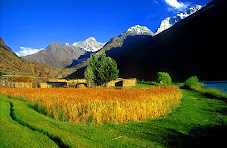
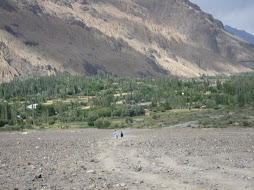
Kishmanja, a beautiful village in Yarkhun valley
Lush green
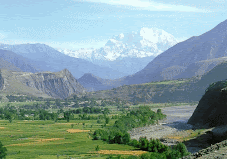
DIZG: threatened by floods
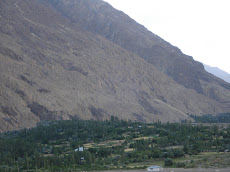
The legendary village of Ayun in Chitral
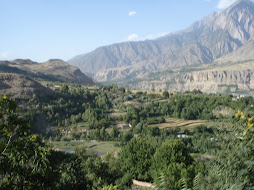
On way to Bumburet
Dizg, Yarkhun
About Me

- Zar Alam Khan Razakhel
- Village Dizg, Yarkhun valley, Chitral, Pakistan
- I blog at http://chitraltoday.net (ChitralToday) about Chitral, its people, culture, traditions and issues. I have been writing about Chitral since 2000. Chitral is a scenic valley in the extreme north-west of Pakistan.